You Don't Need to Finish the Garden
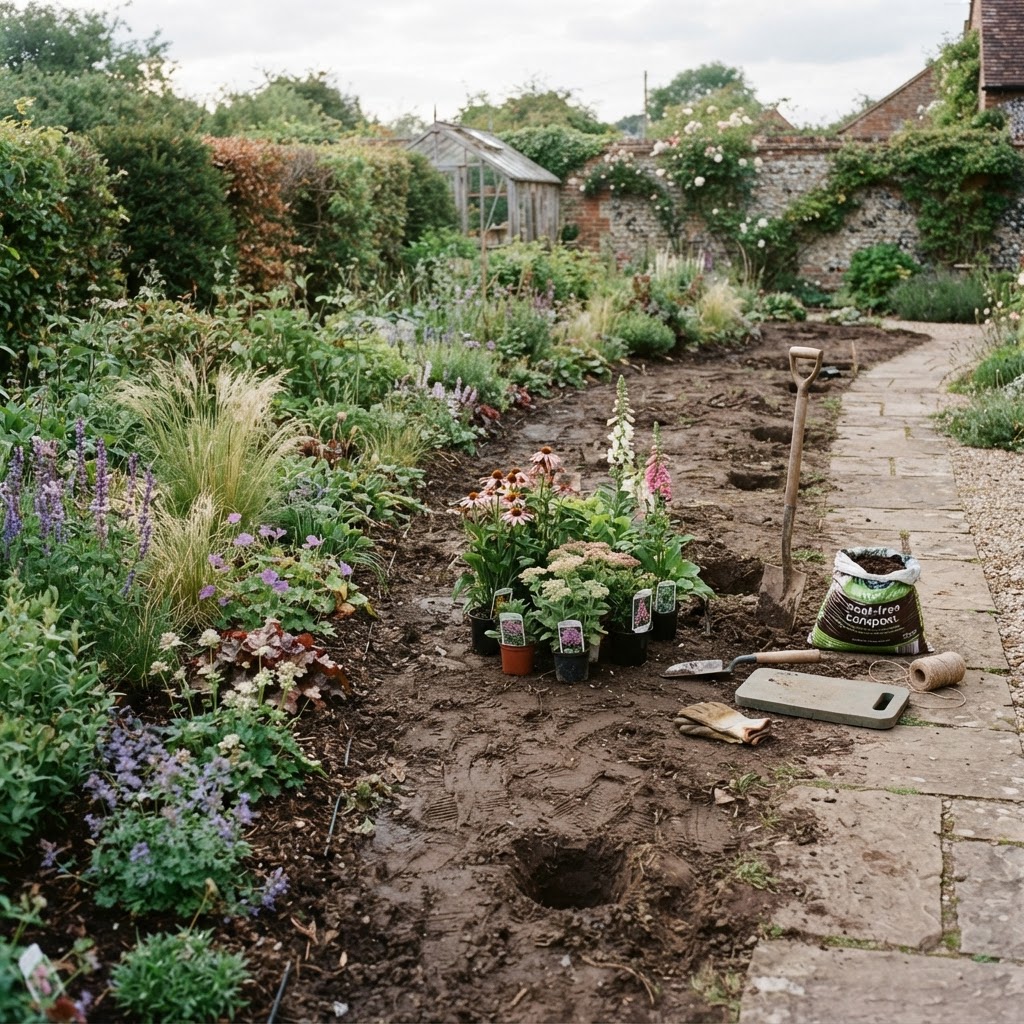
There's a particular thought that quietly runs under a lot of gardening: once I get this sorted, I'll finally be able to relax and enjoy it. The border finished, the structure planted, the whole space brought up to standard — and then, at last, the real enjoyment can begin. So you work towards that point. And somehow, however much progress you make, the finish line keeps receding just as fast as you approach it.
That's not a failure of effort. It's a sign that the goal itself was never really achievable, because a garden was never the kind of thing that finishes. Waiting to enjoy it until it's "done" means waiting for something that was never going to arrive — not because you're not working hard enough, but because gardens don't have a done.
The project that never has an end date
It's an easy trap to fall into, because most of what we're taught to value comes with a clear finish line. A renovation gets completed. A course gets passed. A project gets signed off, filed, and put behind you. Treating the garden the same way feels natural: identify what's wrong, fix it, and arrive at the finished result.
The trouble is that a garden doesn't hold still long enough for that model to work. By the time one border is exactly as you pictured it, something else has moved on — a shrub's outgrown its space, a plant's died back, the border you finished last spring needs attention again by autumn. There is no version of "finished" a garden will sit in and wait for you to admire. It's simply not built that way, and measuring your progress against an end state that doesn't exist is a reliable way to feel like you're always falling short, no matter how much you've actually done.
A relationship has no finish line — and that's the point
The more useful frame isn't a project at all. It's a relationship. A project has an end state and a verdict — finished or not, pass or fail. A relationship has seasons, forgiveness, and return. Nobody expects a friendship to reach a completed state and then require no further attention. You don't finish a friendship. You keep showing up for it, indefinitely, and that ongoing showing-up is the whole point rather than a stage on the way to some final result.
A garden works the same way, once you stop trying to force it into the project shape. It is never finished — it's always in the middle of its own story, which is exactly where a garden is meant to be. That's not a consolation prize for gardens that haven't reached their potential yet. It's simply what a living, growing thing does. A garden that stopped changing wouldn't be a finished garden. It would be a dead one.
What relationships do instead of finish
Where a project measures itself by distance from the end, a relationship measures itself by whether you keep returning to it. Some seasons are easier than others. Some weeks get missed entirely. None of that undoes what came before, the way an interrupted project might have to be scrapped and restarted. A relationship simply picks back up where it left off, because absence was never the same thing as failure — it was just a gap, waiting to be closed by showing up again.
That shift matters enormously for how gardening actually feels day to day. If you're chasing a finish line, every visit is measured by how much closer it brought you to "done" — and since done never arrives, every visit quietly falls short. If you're tending a relationship instead, every visit is simply itself: a moment of attention, complete on its own terms, needing nothing beyond having happened.
What "done" actually looks like
It's worth being honest about what change over years of tending a garden actually looks like, because it isn't the polished, finished image the project mindset is chasing. Several years into a daily practice, you'll still have weeds. The garden will still need things from you. What will have genuinely changed isn't the garden reaching some completed state — it's what an ordinary Tuesday in that garden feels like. The ritual becomes as natural as putting the kettle on. You're measurably calmer standing in the same space that used to make your shoulders tighten, even though the space itself was never "finished" in any conventional sense.
That's the real destination, and it's a considerably kinder one than the project mindset was offering. It doesn't ask you to wait for an end point that keeps moving. It asks you to notice that the relationship itself — the daily returning, the small attention — has already been quietly changing things, all along, whether or not the garden ever looks "complete."
Living inside an unfinished garden
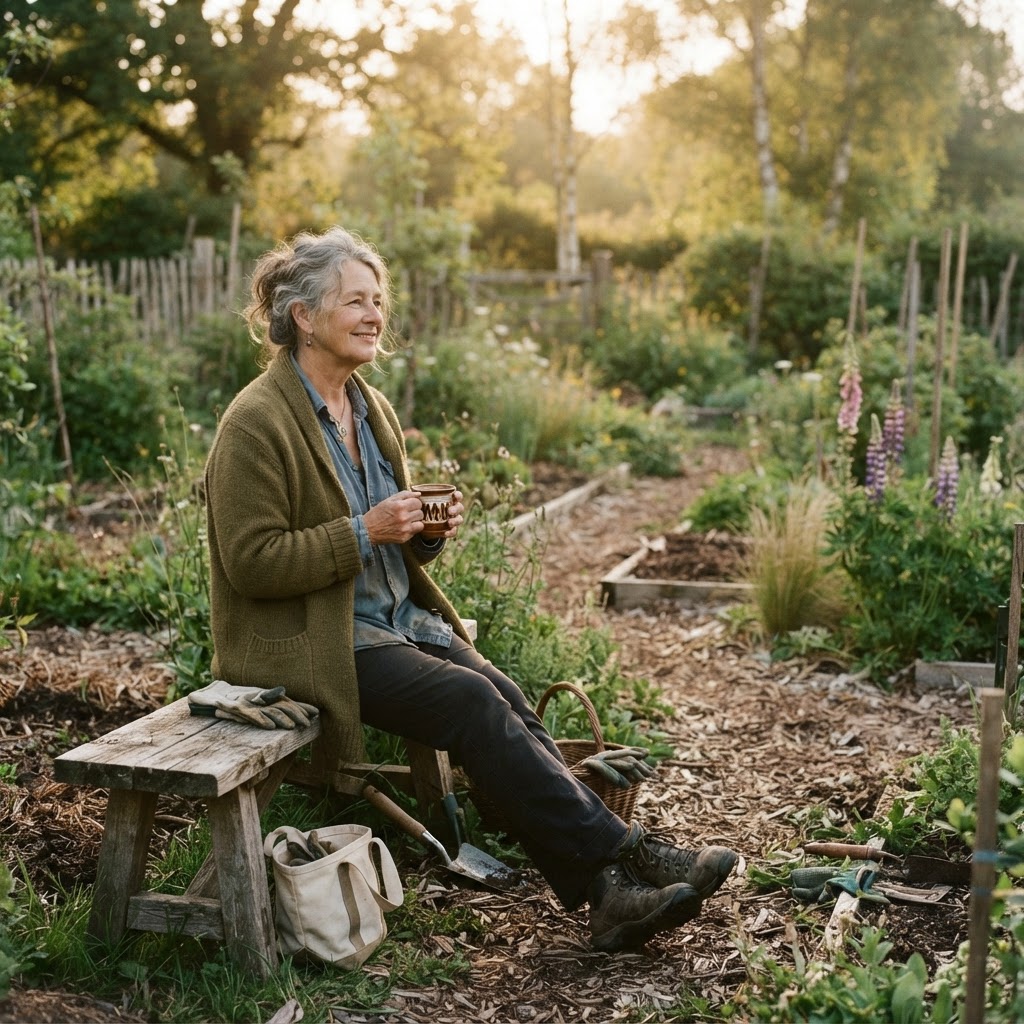
None of this means you stop wanting to improve things, plant new borders, or work towards a space you're genuinely proud of. It simply means you stop making your enjoyment of the garden conditional on reaching some final version of it. You're allowed to enjoy an unfinished garden today, exactly as it is, the way you'd enjoy time with a friend without first requiring the friendship to be complete. The enjoyment was never supposed to wait for the finish. It was supposed to happen alongside the ongoing, unfinished process the whole time.
This week: stop waiting for "done"
Next time you catch yourself thinking I'll properly enjoy this once it's finished, pause and ask instead: is there something here, today, exactly as it is, worth a few minutes of my attention and appreciation? Spend ten minutes in the garden without trying to move it towards completion — just tending it, the way you'd spend time with someone you care about, with no finish line in mind at all.
The garden was never going to be finished. It was always just going to be tended — and that, it turns out, was the whole point.
If you'd like to picture where a daily practice like this actually leads, our 5-Year Garden Vision worksheet is a short, honest way to set expectations — not for a finished garden, but for a genuinely easier relationship with the one you have.