Why Looking Out of the Kitchen Window Makes Gardening Feel So Heavy
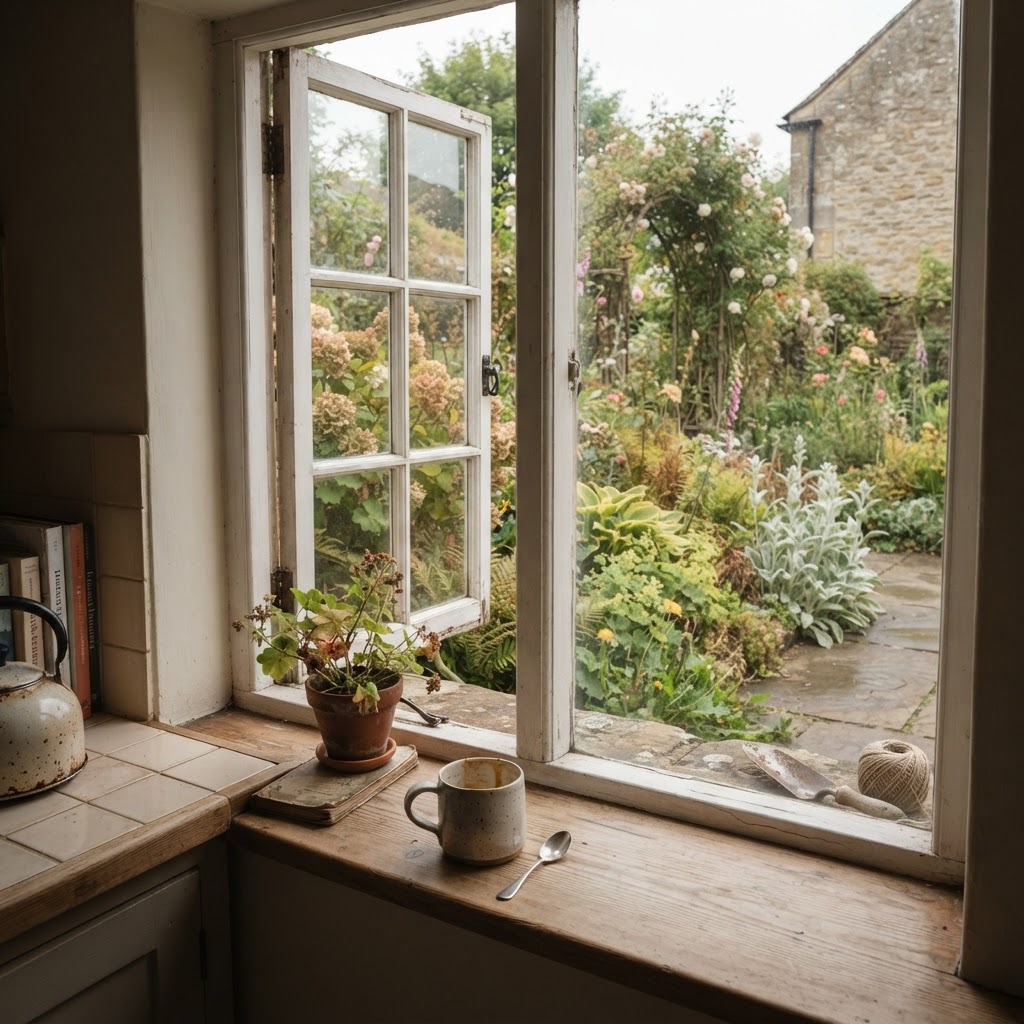
You stand at the window with your coffee and feel your shoulders tighten. The garden is out there. It has been out there, accumulating small evidence of everything you haven't done, for weeks. You love it — that's the difficult part. You love what it could be, and you feel quietly guilty about the gap between that and what it is.
What's strange, if you stop to think about it, is that this exact feeling rarely happens anywhere else in the garden. You can walk past the border along the side path without a flicker of guilt. You can forget the far corner behind the shed entirely, for months, and feel nothing at all. It's specifically the view from the window — the one you see every single morning, whether you mean to or not — that carries all the weight.
That's not a coincidence, and it isn't really about the plants. It's about repetition, and what repetition does to guilt.
The same view, every day
Most of your garden, you choose to look at. You walk out to it, you decide to pay attention, and then you come back inside. The view from the kitchen window is different: you don't choose it. It's simply there, every time you make tea, every time you stand at the sink, every time you glance up mid-conversation. You see it whether or not you're in the mood to think about the garden at all.
That constant, unchosen exposure is exactly what makes it feel so much heavier than any other part of your outdoor space. A border you visit occasionally gets judged occasionally. A view you see forty times a day gets judged forty times a day — and every one of those glances is a tiny, almost unconscious tally of what hasn't been done. None of it is dramatic on its own. A few weeds. A pot that wants deadheading. But multiply one small unfinished thing by every time you happen to glance up, and it stops feeling small.
This is worth naming plainly, because it isn't a character flaw and it isn't really about how untidy the garden actually is. It's simple psychology: the parts of a garden you see most often are the parts that will always carry the most emotional weight, for better or worse. You haven't failed at gardening. You've just been standing at a window that never lets you look away.
How the guilt loop actually works
Garden guilt tends to follow a fairly predictable shape, and it's worth understanding the mechanics of it rather than just feeling caught inside it. It usually starts small: a task gets missed — a deadhead, a watering, a weed pulled — and instead of staying a neutral, forgettable fact, it turns into a quiet verdict. I'm bad at this. That verdict makes the next attempt feel heavier than it needs to be, because now there's something to prove, not just a small job to do. The heaviness makes avoidance more likely. And the avoidance, inevitably, brings its own guilt — which feeds straight back into the loop it started.
The window is where this loop tightens fastest, precisely because of that repetition. Somewhere you see once a week gets one chance a week for guilt to take hold. Somewhere you see forty times a day gets forty chances — forty small reminders that something hasn't been dealt with, each one a fresh opportunity for I'm bad at this to settle in a little further.
Why "try harder" makes it worse
The instinctive response to all of this is usually to try harder — to resolve, next weekend, to finally sort the whole view out properly. But effort aimed at the wrong problem tends to tighten a loop rather than loosen it. The issue was never a lack of trying. It's that a view you can't choose to look away from was being treated as a to-do list, when really it was just telling you something useful: this is the part of the garden that matters most to you.
The window was never the enemy
Here's the reframe worth sitting with: the fact that your kitchen window carries so much weight isn't a design flaw in you. It's information. The view you can't stop noticing is, almost without exception, the space that shapes your daily experience of the garden more than anywhere else — which is exactly the definition of what's sometimes called your Zone 1, the small, high-impact area that earns daily attention precisely because you can't help but see it.
Once you understand that, the window stops being the source of the guilt and starts being the signal for where your ten minutes should actually go. It was never nagging at you out of spite. It was pointing, quite accurately, at the one part of the garden most worth your attention.
Breaking the loop at the window itself
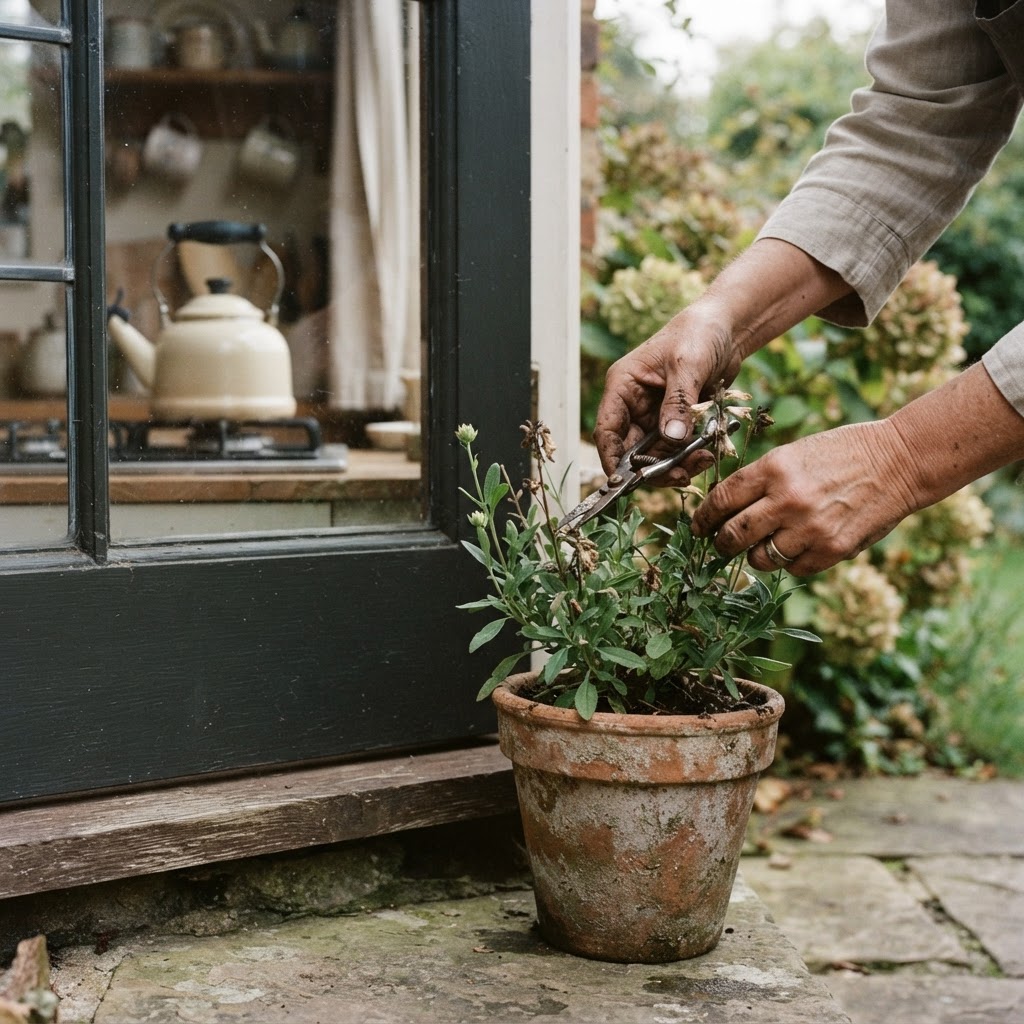
The way out of this isn't to look away, and it isn't to finally win the garden in one heroic weekend. It's to let the window do what it was always trying to do — direct your attention — and to answer it in small, repeated doses rather than one large one. A daily glance that used to trigger guilt can just as easily trigger a two-minute task instead: a deadhead, a quick water, a weed pulled while the kettle boils. The repetition that used to tighten the loop becomes the very thing that keeps it loose, because the view starts reflecting back a small, recent act of care rather than an accumulating list.
This week: let the window ask a smaller question
Tomorrow morning, when you catch that view from the window, resist the pull to take in the whole picture and judge it. Ask a smaller question instead: what's the one thing here that would take two minutes? Do that one thing, today, and let the rest of the view wait for tomorrow's glance. Over a week of mornings, that's the loop loosening — not because the garden changed overnight, but because the window stopped being a verdict and started being an invitation.
If the guilt loop is a pattern you recognise, our Break the Guilt Loop worksheet walks through naming it in your own words — the first real step to loosening it.