The Wilder Margins: Making Honest Peace with the Parts of Your Garden You'll Never Get To
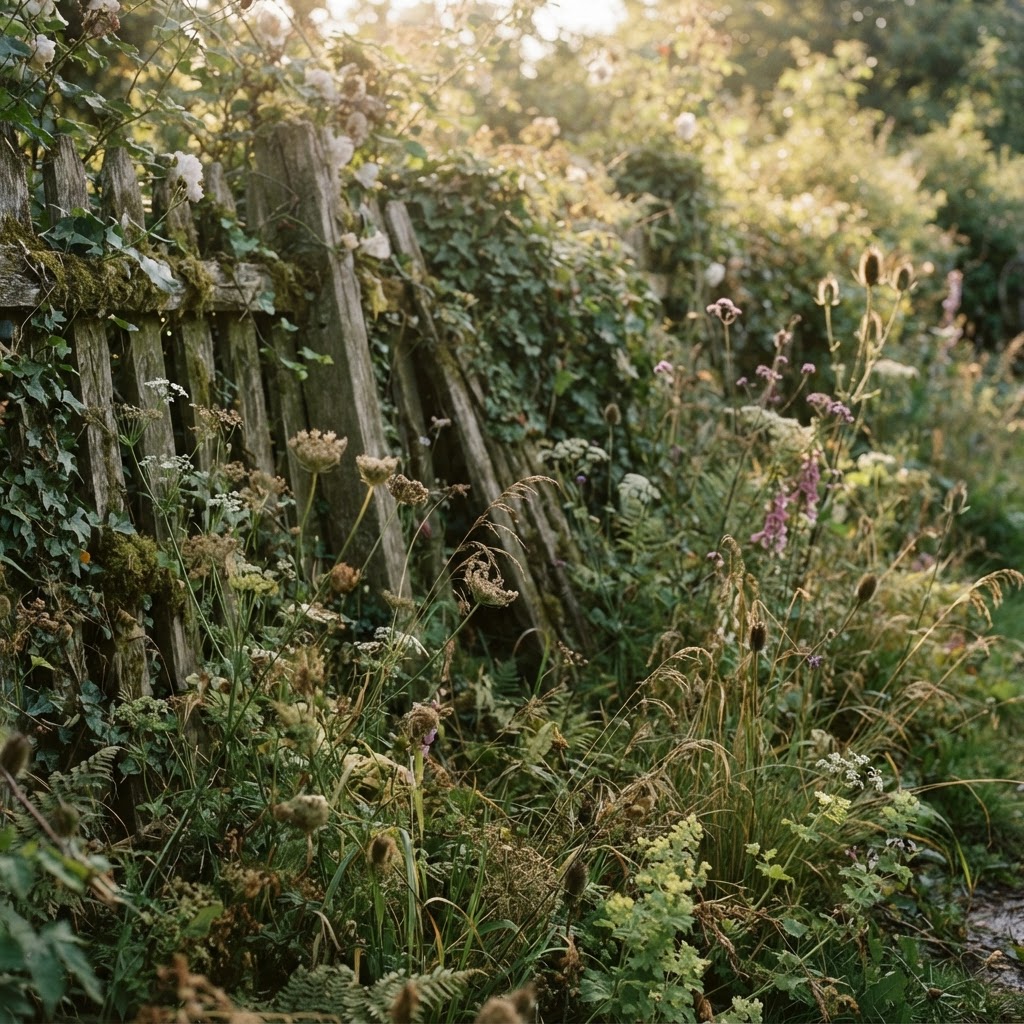
Every garden has one. A corner behind the shed. A strip along the back fence that's gone properly wild. A patch that's meant to be tidied "one of these days," a day that somehow never arrives. Most gardeners have a complicated relationship with this part of their plot, half fondness, half guilt, as though it's evidence of something they should have got round to by now.
It's worth asking a genuinely different question about that corner. What if it isn't a failure at all? What if it's actually doing exactly what it's supposed to be doing, and the only thing missing is your permission to see it that way?
Why Wildness Feels Like Failure
Most of us come to gardening carrying an unspoken assumption: that a well kept garden is a fully controlled one, and that any patch left to its own devices is simply proof we haven't got round to managing it properly yet. This isn't a personal failing so much as an inherited idea, absorbed from years of gardening advice that treats control as the measure of competence.
The trouble is that fighting a garden's natural conditions, trying to force every corner into the same tidy standard, is exhausting and usually futile. Once you stop trying to impose your will on every corner of a garden and start listening to what it's actually telling you, everything tends to get easier. And more interesting. And, over time, more beautiful. Wildness isn't what happens when control fails. It's often what happens when control finally, deliberately, steps aside.
There's a related trap worth naming too: the garden designed purely to impress. A garden built entirely around looking flawless from every angle can genuinely achieve that look, and still leave its owner with a constant, low level dread about letting the standard slip even slightly. That's not peace. That's simply a different, more exhausting kind of pressure, dressed up as achievement. A garden with wilder margins built in, by contrast, doesn't ask you to maintain a flawless standard everywhere at once. Its beauty can serve you, rather than requiring you to serve it.
The Difference Between Neglect and Wildness
Here's the distinction that actually matters, and it's worth holding onto carefully, because from a distance the two can look remarkably similar. Neglect is something that happens to a space by accident, through absence of attention and absence of choice. Wildness, as this practice means it, is a conscious decision: choosing to let part of a garden be what it naturally wants to be, rather than what a tidy standard demands of it.
That distinction matters both to the garden and to how you feel walking through it. A neglected corner tends to carry a low hum of guilt every time you glance at it, a reminder of something undone. A deliberately wild corner, once you've genuinely made peace with the choice, tends to carry something closer to quiet pleasure, the sense that this particular patch of ground has been given permission to simply be itself.
What I Found When I Finally Let a Border Go Wild
This was, for many gardeners, the hardest zone to embrace, and it's worth being honest about why. Perfectionist instincts want to manage everything, every visible surface, every border, every corner. Letting go can feel uncomfortably close to giving up, even when, rationally, you know it isn't.
But the year one back border was finally allowed to go properly naturalistic, something unexpected happened. It attracted noticeably more birds and butterflies, while asking for dramatically less work than it ever had under close management. Goldfinches began appearing on the seedheads in autumn, drawn to exactly the kind of standing growth that a tidier approach would have cut back weeks earlier. A pair of wrens nested in a thicket that had been earmarked for cutting back for two full years and never quite got to. Slow worms turned up under a log pile that had been moved to the edge of the garden and, quite by accident, simply never moved back.
Some of a garden's greatest gifts come from the areas you eventually learn to leave alone. That's not a consolation prize for a corner you couldn't manage. It's often, quite literally, the most rewarding part of the whole garden, precisely because nobody's been managing it.
The Ecological Case for Leaving Things Alone
Beyond the personal relief of letting go, there's a genuinely practical case for wilder margins too. A patch of long grass, left to seed itself and change from year to year without intervention, supports insect life that a closely mown lawn simply can't. A log pile at the garden's edge offers shelter to slow worms, beetles, and any number of small creatures that need somewhere undisturbed to live out their lives. Native plants left to self-seed and spread, echinacea, rudbeckia, aster among them, can turn a border briefly extraordinary in late summer, thick with colour and movement, entirely without anyone having planned or planted that particular display.
This part of the garden works, in a sense, by reminding you that you're not the most important thing happening in it. There are creatures going about their own lives in that wild corner entirely without reference to yours. Processes like growth, decay, and pollination were happening there before you arrived, and will carry on happening after you've gone back inside. There's something genuinely restorative about that reminder, once you stop resisting it.
How to Signal "This Is Wild on Purpose"
One of the most common worries about wilder margins, understandably, is how they'll read to other people. Will a neighbour, or a visitor, or even you yourself on a low day, see a wild corner as a choice, or simply as a garden that's been let go?
A little structure goes a long way here. A few well placed structural evergreens near the edge of a wilder area give it a sense of year round framework, a visual signal that someone is still paying attention to the space as a whole. A clearly defined edge between a managed area and a wild one, whether that's a mown strip of grass or a simple border line, tells the eye instantly that the wildness beyond it was a decision rather than an oversight. Most people, in practice, can sense the difference quite easily between an intentionally wild corner and a genuinely abandoned one, provided there's some small, deliberate signal marking the boundary.
What to Plant in Your Wilder Margins
Wilder areas ask for a different kind of planting than the rest of the garden. Rather than plants that need constant deadheading, feeding, and close attention to perform well, this is the place for species that are ideally native or naturalistic, plants that support local wildlife and largely sustain themselves once they're established.
Think of plants that self-seed readily and are welcome to spread where they land, rather than being tightly controlled to a single spot. Grasses that move in the wind and offer shelter through the colder months. Flowering natives that pollinators genuinely rely on, rather than showy hybrids bred primarily for appearance. None of this needs to be complicated or expertly planned. Often the most successful wild margins are simply the ones where a few suitable plants were introduced once, and then left to find their own way from there.
The Self-Seeded Surprise
There's a particular kind of pleasure that only a wild corner can offer, one that a carefully controlled border never quite manages. It's the pleasure of the self-seeded surprise: a calendula appearing somewhere you never planted it, a foxglove suddenly standing tall in a gap you'd forgotten about, a whole patch of something lovely that simply arrived on its own while you weren't looking.
This is grace, not control. It's the garden offering you something you didn't plan for and couldn't have taken credit for even if you'd wanted to. Gardeners who manage every square inch closely rarely get to experience this particular kind of delight, because there's no room left for anything unplanned to happen. The wilder margins are precisely where a garden gets to surprise you.
Making Peace With the Corner You'll Never Get To
If you're standing in your own garden right now, looking at a patch you've been meaning to tackle for months, or years, it's worth asking honestly: does this corner actually need tackling, or has it simply been carrying an old assumption that every part of a garden must look the same?
You don't need to justify every square foot of your garden to anyone, including yourself. Not every part of it needs maintaining to the same standard. Some areas matter enormously and deserve your consistent, devoted attention. Some need only occasional care. And some are genuinely, legitimately best left to find their own way. Restraint and focus, applied deliberately rather than by accident, tend to create more beauty than endless effort across every corner ever manages.
How to Start Letting One Area Go This Season
If this idea appeals to you but feels unfamiliar in practice, there's no need to redesign your whole garden at once. Choose one small area, a corner, a strip along a fence, a patch you already half suspect wants to be wilder than you've been letting it be. Add a simple visual boundary, a mown edge or a low structural planting, so the choice reads clearly as intentional. Then step back for a season and genuinely watch what happens.
Resist the urge to intervene too quickly if the area looks a little untidy at first. Wildness tends to find its own shape over a season or two, often becoming more beautiful, not less, the longer it's left to settle into itself. Notice what arrives there that you didn't plant. Notice which creatures start using it. That noticing is, in many ways, the whole reward.
Frequently Asked Questions
How do I stop a wild area from looking like genuine neglect?
A clear boundary is the simplest fix, whether that's a mown strip of grass, a low hedge, or a defined border edge. This single visual cue does most of the work of signalling that the wildness beyond it is a deliberate choice rather than an oversight.
Will letting part of my garden go wild attract pests as well as wildlife I actually want?
It's a fair concern, but in practice a genuinely balanced wild area tends to attract a wide mix of creatures, predatory insects and birds included, that help keep problem populations in check naturally. A closely managed garden, by contrast, sometimes loses these natural checks entirely.
How much of my garden should I let go wild?
There's no fixed rule, and it depends entirely on your garden's size and your own comfort with the idea. Many gardeners find that even a modest area, a single corner or border, offers most of the ecological and emotional benefit without requiring a wholesale change to the rest of the space.
What if my neighbours or family don't like the look of a wilder area?
It often helps to involve them directly, explaining the reasoning and perhaps inviting them to help choose or shape the area themselves. Framing it around the wildlife and ease it brings, rather than simply "less work," tends to land better than any argument about tidiness.
Can a wild area still look attractive, or does it have to look messy?
It can absolutely look beautiful, particularly once native and self-seeding plants have had a season or two to establish. Late summer wild borders, thick with colour from naturalised flowering plants, are often some of the most striking parts of a garden precisely because nobody has been fussing over them.
Is it true that wild areas need less maintenance than the rest of the garden?
Generally, yes. Once established, wilder margins tend to largely sustain themselves, needing only an occasional check in rather than the regular attention that more cultivated areas require. That's a large part of what makes them such a relief to include.
The corner you've never quite got to might not be waiting for you to fix it. It might simply be waiting for your permission to be exactly what it already is.
Your Garden Friend