The Weekend Warrior Cycle: Why One Big Push Leads to Weeks of Avoidance
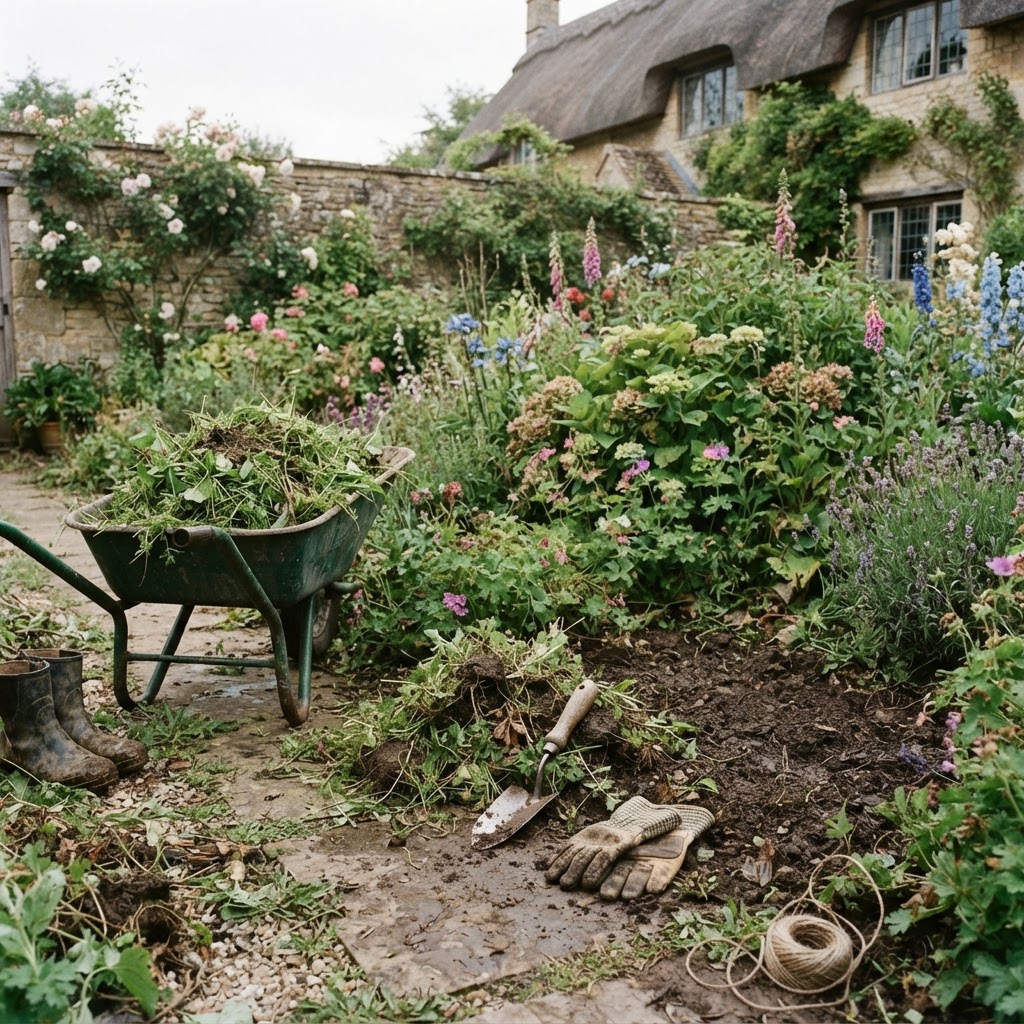
Saturday afternoon, and you've given the garden everything you've got. Three hours of weeding, a barrow load of clippings, soil under your nails and a genuinely satisfying ache in your back. You stand back at the end of it and the border looks transformed. For one evening, you feel like a proper gardener at last.
Then a fortnight goes by. Work gets busy, the weather turns, life does what life does — and when you finally look properly again, the border has slipped most of the way back to where it started. Weeds you cleared have been replaced by new ones. The bit you didn't get to has quietly gone further downhill. And now, instead of a pleasant Saturday, you're looking at something closer to a full day's work just to get back to where you were a fortnight ago.
This is the weekend warrior cycle, and if it sounds familiar, you're in very good company — it's the pattern most gardening advice was quietly built around, and it's a pattern that was always going to wear people down.
The pattern behind the burnout
The logic of the marathon session feels sound on paper. You're busy during the week, so you save it all up and deal with it properly when you have the time. One big push, one satisfying transformation, job done. It's the same logic behind a lot of how we're taught to manage anything demanding — batch it, then rest.
Gardens don't really work that way, and neither, in practice, do people. A single heroic Saturday takes real physical and mental effort, and effort like that has to be paid back somehow. What usually happens next is a quiet, understandable retreat: the garden gets left alone for a while, because you've earned a rest and because, frankly, three hours of hard graft isn't something you're eager to repeat next weekend too. That retreat is where the trouble actually starts.
Why the marathon always leads to avoidance
Here's the part that rarely gets said out loud: most of the hours spent in a marathon session aren't spent making progress. They're spent undoing what built up in the gap since the last one. Weeds that would have taken seconds to pull as seedlings have had a fortnight to establish, and now need proper digging out. A container that dried out twice has struggled rather than simply been topped up. Small problems that a daily glance would have caught early have had time to become bigger ones.
That means the "big push" was never really moving the garden forward. It was mostly just catching up — and catching up is exhausting in a way that regular maintenance never is, because it's fighting against weeks of accumulated neglect rather than working with a space that's already in reasonable shape. The bigger the gap between sessions, the harder the next one has to work just to break even.
The debt that builds while you recover
And then there's what happens after the session ends. A garden that's just had three hours of intensive attention doesn't need daily care for a little while — but a garden that's about to be left alone for another fortnight does need to be checked on, and it isn't. The satisfaction of Saturday's transformation fades into the same low hum of avoidance that started the cycle in the first place: you glance out, you notice something's not quite right, and rather than dealing with it in two minutes, you file it away for "when you next have a proper session." The debt starts quietly accumulating again, right from the following week.
This is the shape of the whole cycle: effort, collapse, avoidance, debt, and then another marathon to clear it — each one no more effective than the last, because the debt was never really the problem. The gap was.
Breaking the cycle without losing the satisfaction
None of this means you did anything wrong by trying the big-push approach. It's genuinely how most gardening advice is written, and it's a reasonable response to a busy week. The issue isn't effort or intention. It's that the model asks you to store up all your care for one day and then survive on it for two weeks — and no relationship, garden or otherwise, holds up well on that pattern.
The alternative isn't more effort spread more thinly. It's less effort, given more often, so the gap between visits never has the chance to turn into debt in the first place. A garden checked on daily doesn't accumulate seedling weeds into an afternoon's digging. It doesn't let a dry container go two weeks without water. The small things get handled while they're still small, which means there's rarely anything large left to save up for a weekend at all.
What this actually feels like day to day

The real difference isn't really about hours saved, though there is that. It's that the dread disappears. There's no Saturday looming where you know you're in for a slog. There's no fortnight of half-noticing something's wrong and putting off dealing with it. Instead there's just today's ten minutes — small, manageable, over before you've really had time to resent it — and tomorrow's, which will be roughly the same.
A garden tended this way rarely needs rescuing, because it's never been abandoned long enough to need it. And a gardener who isn't bracing for the next big catch-up session tends, quite naturally, to stop avoiding the garden altogether. There's nothing left to avoid.
This week: swap one marathon for seven small visits
If you've got a session planned for this coming weekend, try something different instead: spend ten minutes in the garden on each of the next seven days, doing only what genuinely needs doing that day. No list, no catching up, no trying to finish anything. Just notice, do one small thing, and leave the rest for tomorrow.
By the end of the week, compare how it felt to a typical marathon Saturday. Most people find the garden is in better shape — and they are too.
If you'd like a simple way to spot small problems before they become weekend-sized ones, our 1-Minute Daily Scan checklist walks through exactly what to look for in under a minute.