The Problem Was Never You: Why Good People Fail at Gardening
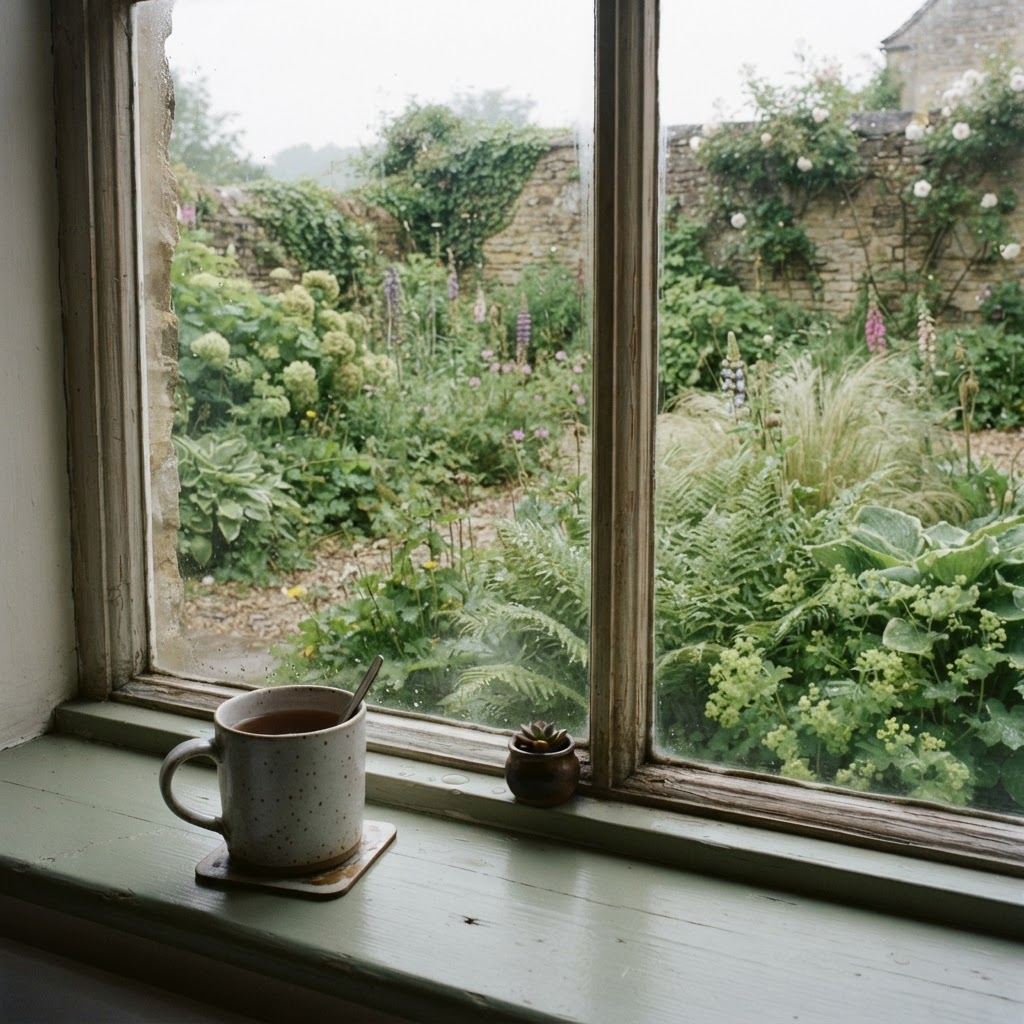
There is a particular kind of morning that most gardeners know. You stand at the kitchen window with a cup of tea cooling in your hand, looking out at a space you once had such hope for, and the first thing you feel is not pleasure. It is a small, familiar drop in your stomach. The roses needed deadheading a week ago. The border you meant to weed on Sunday is still waiting. Somewhere behind the guilt is a quieter, harder thought: I should be better at this than I am.
If that sounds like your kitchen window, take a breath. What follows is not another list of things you're failing to do. It is something closer to the opposite.
The problem was never you. It was the approach.
The Guilt You Carry Isn't Really About the Weeds
Here is something worth sitting with: the guilt that most gardeners carry has very little to do with the actual state of their soil.
It feels like it's about the weeds, the patchy lawn, the pots that dried out while you were away for a fortnight. But underneath the specific failures is something larger and more personal. It is the gap between the garden you imagined when you first planted it and the garden you actually have. Between the person you thought you'd be, tending your plot with quiet competence, and the person you turned out to be, walking past the border and looking the other way.
That gap is painful because it feels like evidence. One missed weekend becomes proof of something. A dead hydrangea becomes a verdict on your character rather than a fact of horticulture (plants die; it happens to the most experienced gardeners among us, not just the newest).
This matters because it changes where the fix needs to happen. If the problem is you, personally and permanently, then no amount of advice will ever be enough. You'll read another article, buy another book, promise yourself you'll do better this year, and quietly fail again, because the story underneath was never challenged. But if the problem is the approach you inherited, something built for a life you don't actually lead, then the fix is entirely different. You don't need to become a more disciplined person. You need a method that fits.
How the Guilt Loop Actually Works
It helps to understand the shape of this pattern, because naming it is the first step to loosening its grip.
A Missed Task Becomes Evidence
It begins small. A weekend passes without any weeding. A plant needed watering and didn't get it. On its own, this is nothing. Gardens survive missed weekends all the time. But the mind doesn't file it away as a neutral event. It files it as evidence: I'm not managing this. I'm bad at this.
Once that story exists, the next attempt at gardening carries extra weight before you've even picked up a trowel. You're not just weeding a border anymore. You're trying to prove something to yourself, and that is a far heavier thing to carry outside on a Tuesday evening.
Perfectionism Turns the Volume Up
The story gets louder when it's measured against an impossible standard. If the only garden worth having is the one in the magazines, photographed at its single best moment by someone paid to make it look that way, then almost every real garden will fall short of it. And a garden that always falls short, by definition, is a garden you eventually stop wanting to look at.
This is worth saying plainly: a magazine spread is not a fair comparison for your Tuesday-evening border. It was never meant to be lived in, only photographed. Holding your own garden to that standard is a bit like comparing your actual Tuesday to someone's holiday photos. It isn't a useful measure of anything.
Avoidance Feeds the Cycle
Once the guilt sets in, avoidance follows naturally. It's simply easier not to look. You walk past the window a little faster. You let the curtain fall back into place. But avoidance doesn't resolve the guilt, it deepens it, because now there's a second layer of shame stacked on the first: not only have you fallen behind, you've also stopped even trying to catch up.
The loop tightens. Missed task, evidence of failure, comparison to an impossible standard, avoidance, more guilt, more avoidance. Round and round it goes, and somewhere in that spinning, an outdoor space that was meant to bring you joy quietly turns into a source of quiet dread.
Naming this pattern is the first step towards breaking it. What comes next is the second.
An Inherited Method Built for a Life You Don't Have
Here is the part that tends to surprise people most: the guilt loop above isn't a personal failing at all. It's the predictable result of following advice that was never designed for the life most of us actually lead.
Where This Advice Came From
Traditional gardening guidance, the kind still printed in most books and glossy magazines, asks for entire free Saturdays. It assumes a household with one person largely dedicated to the garden, a weekend unclaimed by anything else, and a standard of finish that belongs in a show garden rather than a real, lived-in one. That world existed for some people, once. For most of us, it doesn't exist now, and in many cases it never did.
Work is busier and less contained than it used to be. Family life makes claims on a Saturday that gardening simply cannot compete with. The weather turns, plans change, and the one clear afternoon you'd set aside gets swallowed by something more urgent. None of that is a character flaw. It is simply what a real week looks like for most people.
Why It Was Always Going to Fail You
So you try to follow the guidance anyway. For a while it works, more or less. Then life intervenes, as life always does, and you miss a weekend. Then another. The gap between the garden the method promised and the garden you actually have starts to widen, and because nobody told you the method itself was the problem, you assume the fault lies with you.
It's worth being direct about this: a system that requires a resource most people don't have, hours of uninterrupted free time, week after week, was never a neutral piece of advice. It was setting people up to fail, and then quietly making them feel responsible for that failure.
Once you see it this way, something shifts. The question stops being "why can't I manage this?" and becomes "why was I ever asked to manage it this way?"
The Permission You've Been Waiting For
Before anything else, before another single piece of advice, there is something more useful to offer: not a task list, but permission.
Explicit, unconditional permission to let go of the perfectionist garden trap and start thinking about your outdoor space in a different way entirely.
You have permission to have weeds. A few weeds don't make you a bad gardener. They make you human, and they make your garden a real one rather than a photograph.
You have permission to let plants die. Plant loss is part of gardening, not a personal failure. Even the most experienced hands among us lose plants regularly. It's how gardens work, not a mark against you.
You have permission to have a messy season. Gardens have quiet months and untidy corners. That doesn't undo the good in them.
You have permission to miss a week, or several. Nothing about your garden ends because you stepped away from it for a while. It will still be there.
You have permission to stop measuring your garden against anyone else's, whether that's a magazine, a neighbour, or the version of your own garden you'd pictured when you started. Your garden only ever needs to answer to your own life, not someone else's.
Read that list again slowly if you need to. It is doing real work.
What Changes When You Believe the Problem Was the Approach
Once you accept that the approach, not you, was the flawed part of this equation, something genuinely useful happens. The next mistake, missed task or dry pot, stops being proof of who you are and becomes simply information about a method that needs adjusting.
This is not a small shift. It is the difference between a relationship with your garden built on shame and one built on curiosity. A missed weekend under the old story means "I've failed again." Under the new one, it means "that approach didn't fit this particular week, so what might fit better?"
That question, asked gently and without judgement, is where an entirely different kind of gardening begins.
A Different Way Forward: Consistency Over Intensity
If the old approach asked for whole weekends, the alternative asks for something much smaller and, oddly, much more effective: a little attention, given often.
Gardens, it turns out, don't reward intensity nearly as much as they reward consistency. Ten minutes a day adds up to well over sixty hours across a year, more than most people manage across all their occasional weekend catch-up sessions put together, and without the burnout that tends to follow a marathon session spent undoing weeks of neglect.
This isn't a motivational slogan. It's closer to simple arithmetic. Small, regular attention prevents the very backlog that the exhausting weekend session exists to clear. You're not trying harder. You're working with a rhythm that a real week can actually hold.
Your First Ten Minutes
You don't need a plan for the whole garden today. You need one small, achievable next step.
Step outside, even if it's only for a few minutes. Don't reach for a task straight away. Simply notice what's there: what's grown, what's changed, what's caught the light. Then choose one small thing, just one, and do it slowly. Deadhead a few spent flowers. Pull a handful of weeds. Check whether a thirsty pot needs water. When it's done, put your tools down and let yourself notice the garden again before you go back inside.
That's it. That is a complete visit. Nothing else is owed today.
Frequently Asked Questions
Why do I feel guilty about my garden even when I'm not looking at it?
This is more common than it might feel. The guilt tends to attach itself to an idea rather than a specific task, the idea that you're falling behind on something important. Because that idea lives in your head rather than in the garden itself, it can follow you indoors. Naming the pattern, as we've done above, is usually the first thing that loosens it.
Is it normal to let plants die?
Yes, entirely. Plant loss happens to gardeners at every level of experience, including those who do this for a living. A dead plant tells you something about light, water, soil or timing. It isn't a verdict on your ability, and it certainly isn't a reason to give up on the rest of the garden.
I've neglected my garden for months. Is it too late to start again?
It's rarely too late. Gardens are forgiving in ways we often aren't with ourselves. A season of neglect can usually be met with a season of gentle attention rather than a single exhausting weekend trying to undo it all at once. Start with ten minutes and one small task, and let the rest wait.
How do I stop comparing my garden to the ones I see online?
It helps to remember that most of those images capture a single, carefully chosen moment, often styled and photographed by someone whose only job that day was to make the space look its best. Your garden is a place you actually live in and use, not a photograph. Those are different things, and comparing one to the other rarely tells you anything useful.
What if I miss several days or weeks in a row?
Then you simply return, the next morning, without any ceremony or self-punishment. There's no streak to protect and no wagon to fall off. A garden is a relationship you come back to, not a record you have to defend.
Do I need special tools or a big budget to start this way?
No. A pair of gloves, a small hand trowel, and ten minutes are enough to begin. The method described here was built specifically to remove the barriers of time and resources that make traditional gardening advice so hard to sustain.
If this is the first time you've heard someone say the problem was never you, let it sit for a moment. You're not starting from failure. You're starting from a better question: not "how do I try harder?" but "what would a method built for my actual life look like?"
That question is where the rest of this practice begins.
Your Garden Friend