The One-Container Garden: Why Small and Well-Kept Beats Big and Half-Done
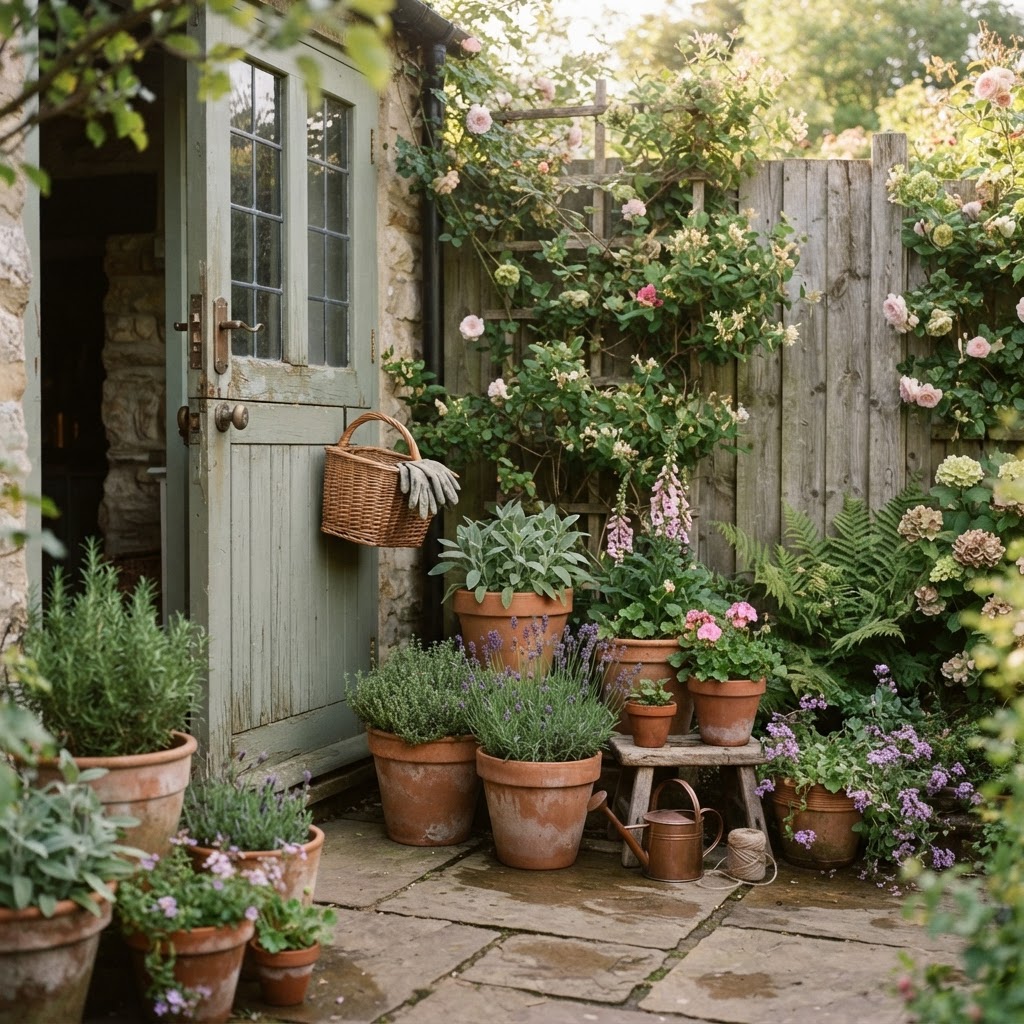
You've got a patio, or a balcony, or a strip of paving by the back door wide enough for a few pots and not much else. Somewhere along the way you decided this doesn't really count. Real gardens have borders. Real gardens have a lawn to mow and a shed to potter in and a whole weekend's worth of jobs waiting. What you've got is a handful of containers and a trough of herbs, and it feels almost embarrassing to call it a garden at all.
That comparison is doing you no favours, and it isn't even true. A garden isn't measured in square metres. It's measured in whether it gets your attention — and a few well-chosen containers, tended properly, will always beat a sprawling space that's half looked-after and half a source of guilt.
The garden that doesn't count
Most of what gets written about gardening assumes a certain scale: borders to fill, a lawn to manage, a shed's worth of tools. If your entire outdoor world is a balcony rail and three pots, that advice doesn't just fail to help — it quietly tells you that what you have isn't really the thing being discussed. You start to feel like you're waiting for a bigger garden before you can properly begin.
This is one of the more unfair tricks that gardening culture plays on small-space gardeners. It isn't your containers that are the problem. It's the assumption, baked into most advice, that a garden has to be a certain size before it deserves proper thought. Once you let that assumption go, something becomes obvious: the principle behind good gardening was never about the amount of space you have. It's about where you put your attention.
Your whole space can be Zone 1
If you've come across zone-based thinking before, you'll know the basic shape of it: most gardens have a small, high-impact area that gets daily attention, a supporting layer that gets a little less, and a wilder, low-intervention background that gets barely any at all. Those proportions are usually described as roughly a fifth, a third, and a half.
But those numbers were never fixed, and they were never really the point. The point is simply this: identify where your attention creates the most value, and give it there first. In a tiny garden, that can mean something quite different from the standard split. A balcony or a patio of containers can reasonably be almost entirely Zone 1 — the whole space, tended daily, because the whole space is visible, all of it earns its keep, and there's no wilder margin to let go of in the first place.
That reframe matters more than it sounds like it should. It means you're not running a smaller, lesser version of a proper garden. You're running a garden that happens to be entirely made up of the part that matters most — which, if anything, is the easiest kind to keep looking genuinely good.
What this actually looks like
Picture a small patio: a handful of containers, a climber trained up a trellis against the fence, a trough of herbs by the back door. All of it visible from the kitchen. All of it visible to anyone who steps outside. None of it hidden round a corner or forgotten at the far end of a lawn.
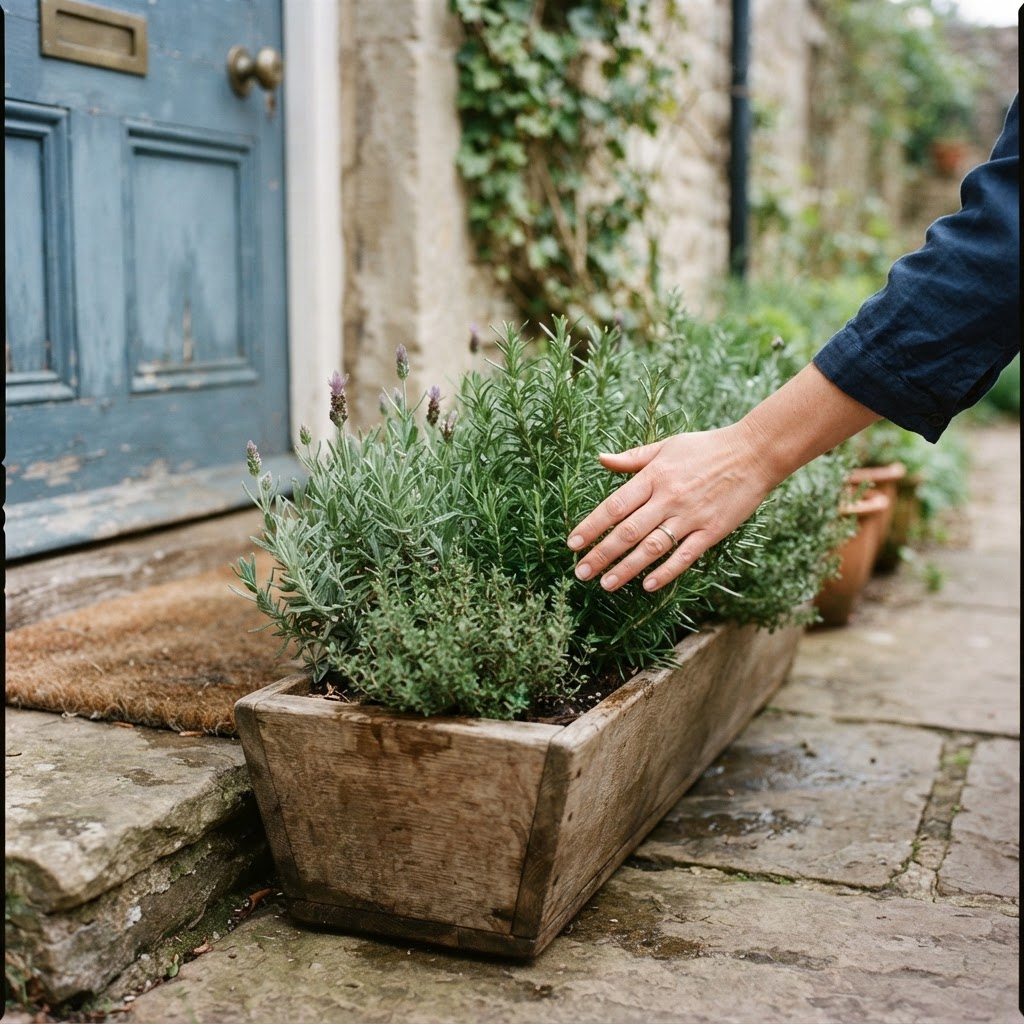
That whole space can be tended in well under ten minutes a day — a quick check for anything that's dried out, a deadhead here and there, a look at whether the climber needs tying in. Nothing about it needs to feel rushed, because there simply isn't very far to cover. And because everything is visible, small changes are easy to catch before they become bigger ones: a pot that's dried out too far, a pest that's started on one plant before it reaches the next.
Compare that with the guilt that comes from a larger, half-tended garden — the border you can see is doing fine but the one round the side has quietly gone to seed, the lawn edge you keep meaning to get to. A well-kept balcony doesn't carry that particular weight. There's nowhere for guilt to hide, because there's nowhere your attention hasn't reached.
Choosing plants that earn their space
Because every container in a small garden is effectively Zone 1, it's worth being a little more deliberate about what goes in each pot. The plants that work hardest here are the ones that perform reliably across a long season, hold their shape under daily scrutiny, and forgive the odd missed watering without sulking for a fortnight — hardy geraniums, long-flowering pelargoniums, evergreen structure like a clipped box or bay in a decent-sized pot, herbs that shrug off a bit of neglect and still smell wonderful when you brush past them.
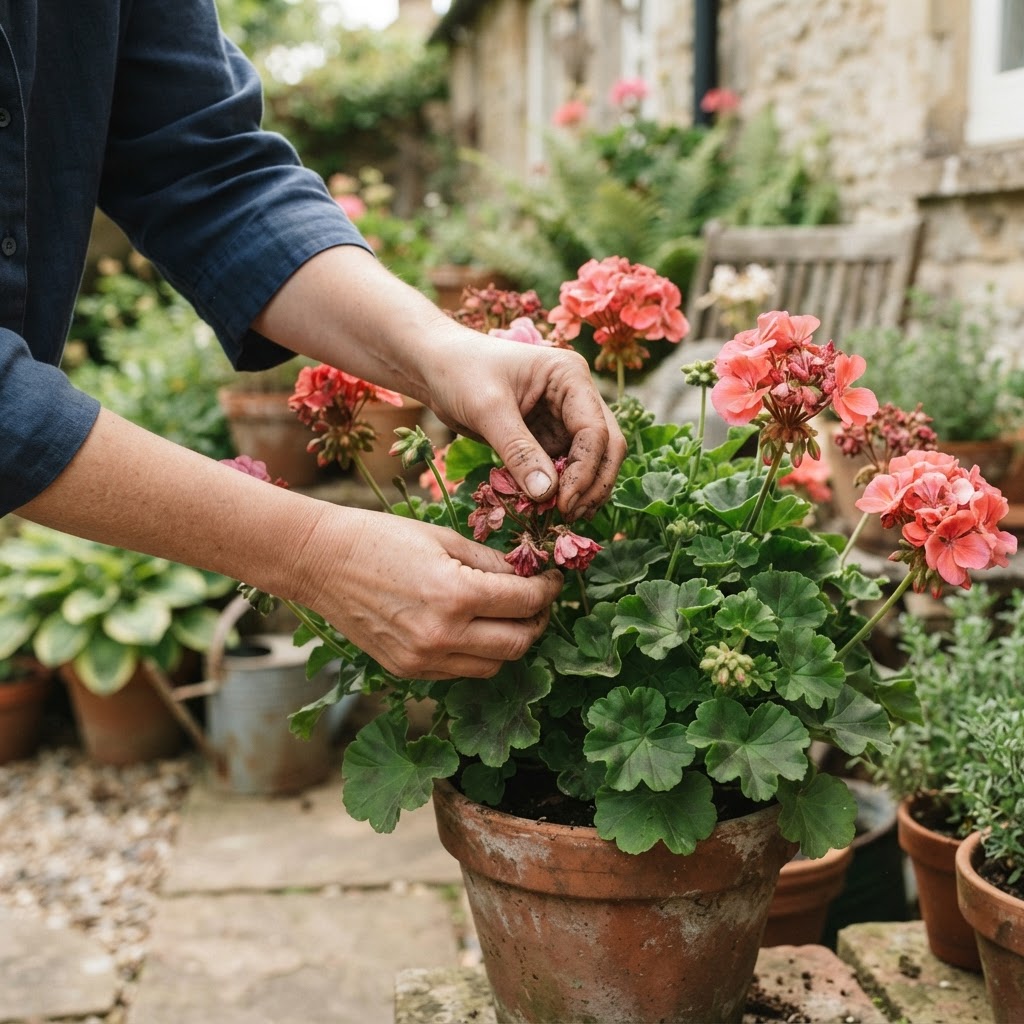
You don't need many. A handful of containers, each doing something genuinely well, will always feel better to live with than a dozen that are all somewhere between thriving and struggling.
Small doesn't mean simple
None of this is a consolation prize for not having more space. A well-kept container garden asks something real of you — the same daily presence any Zone 1 does — and it gives back in exactly the same proportion. The satisfaction of stepping onto a small patio where everything is genuinely cared for is not a smaller version of the satisfaction of a large, thriving garden. It's the same feeling, at a different scale.
What it isn't is an excuse to spread yourself thin trying to make a small space do the job of a much bigger one — cramming in more pots than you can realistically tend, chasing the abundance of a garden three times the size. Small garden design, done well, means choosing a handful of things and doing right by them, not trying to out-plant a space you don't have.
This week: give your whole space one visit
If your entire garden is a patio or a balcony, try treating it as what it already is — a complete Zone 1 — rather than a lesser version of something bigger. Spend ten minutes this week walking round every container you have. Check what's dry, deadhead what needs it, notice what's thriving and what might want moving to catch a bit more light. That's the whole garden, cared for, in one sitting.
There's nothing small about that.
If you're working with a patio, balcony, or a handful of pots, our Zones for Your Garden Size guide walks through how to set proportions that actually fit your space — however much or little of it you have.