The Four-Beat Visit: A Ten-Minute Gardening Practice Anyone Can Keep
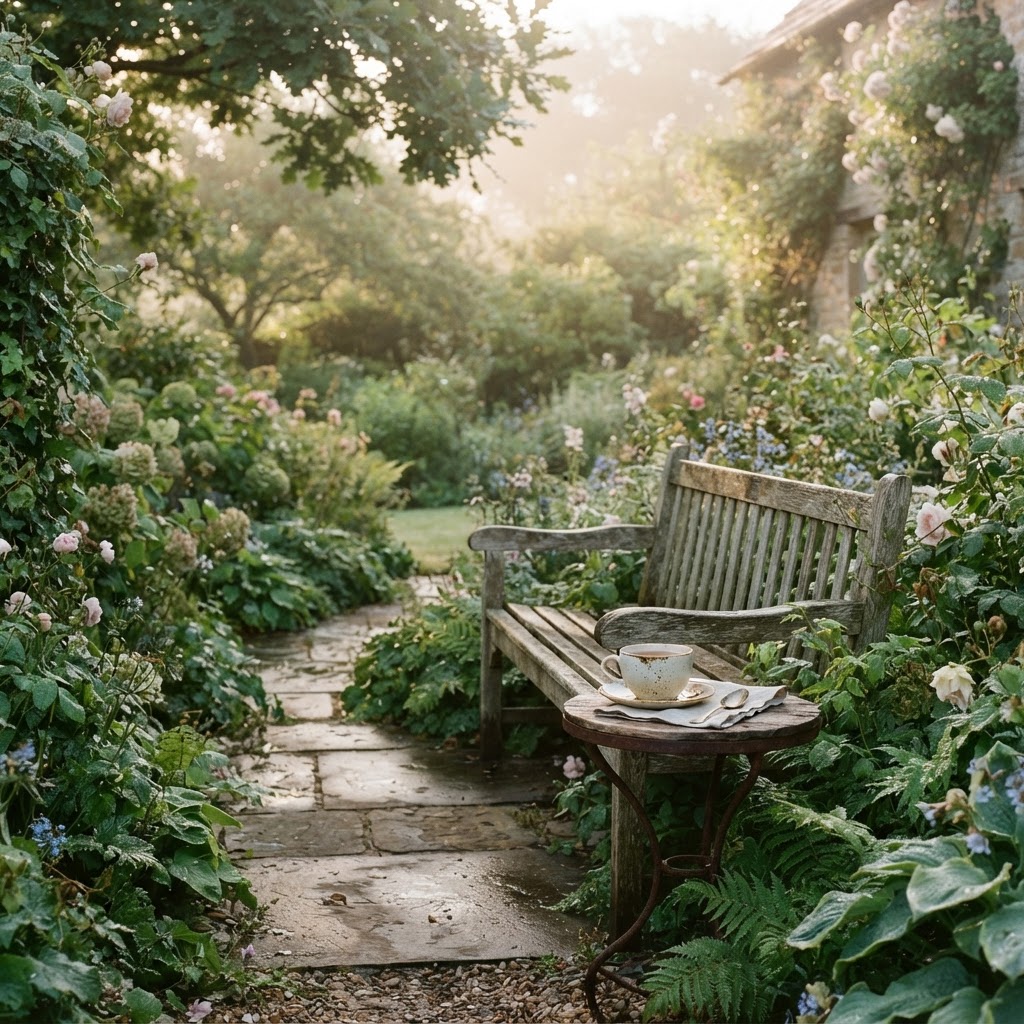
Ten minutes doesn't sound like very long. It's roughly the length of time it takes to make a cup of tea and let it cool enough to drink. And yet, done the right way, ten minutes a day in the garden is enough to change how your outdoor space looks, and quite possibly enough to change how your days feel too.
This isn't a productivity trick or a clever hack for squeezing more out of your evenings. It's a simple, repeatable shape for spending time in the garden that works whether you have acres or a single balcony pot, whether you're an early riser or someone who barely manages the school run. The shape has four beats: arrive, observe, do one thing, appreciate. Learn that shape, and you have everything you need to begin.
What the Ten Minutes Actually Is
Before we get to the shape itself, it's worth being clear about what ten minutes is meant to be, because it's easy to misunderstand.
Ten minutes is a floor, not a ceiling. It is the minimum, gentle, sustainable amount of attention a garden needs to be kept in a good relationship with you. It is not a limit on how long you're allowed to enjoy being outside. Some days you might find yourself out there for half an hour, lost in the pleasure of it, and that's lovely when it happens. Other days, ten minutes is genuinely all you have, and that is entirely enough. Nobody is measuring you against a longer session you didn't have time for.
This distinction matters because so much gardening advice quietly implies the opposite: that a real gardener finds hours, and ten minutes is what you settle for when you can't manage the "proper" version. That framing is exactly what this practice is built to undo. Ten minutes, done with real attention, is a complete and legitimate way to tend a garden. It isn't a compromise. It's the method.
Why ten minutes specifically? Because it sits in a useful middle ground. It's short enough that almost anyone can find it, even on a demanding day, which means the barrier to simply beginning is very low. But it's also long enough to complete one meaningful task properly, and short enough that you can't rush through it without noticing what's actually in front of you. Ten minutes has a natural pace built into it. You can't hurry ten minutes into five without the visit losing its shape.
The Four-Beat Shape: Arrive, Observe, Do, Appreciate
Every effective visit to the garden, however short, tends to follow the same natural rhythm. It isn't something you need to force. Once you know the four beats, you'll likely recognise that the best sessions you've already had followed this shape more or less by instinct. Naming it just makes it easier to repeat on purpose.
Beat One: Arrive
Step outside. That's the whole instruction. Whatever the day has been, whatever's still waiting for you indoors, arriving is the moment you let a little of that fall away.
This beat is smaller than it sounds and easy to skip past without noticing. Most of us step outside already halfway into the next task, phone half-checked, mind still turning over an email. Arriving properly means pausing, even briefly, to let your body register that you've actually left the indoor version of your day behind. Take a breath. Feel the temperature of the air. Notice the particular quality of the light at this hour. None of this takes more than a few seconds, but it changes the visit that follows.
Beat Two: Observe and Choose One Task
Once you've arrived, look before you touch anything. What's changed since yesterday? A bud that wasn't there before. A pot that's dried out faster than expected. A weed that's got a little further along than you'd like. The garden is always telling you something, if you give it a moment before reaching for a tool.
From what you notice, choose one task. Just one. This is usually the moment people find hardest, because a garden rarely offers only one thing that needs doing. You'll likely spot several jobs on your way to the one you've chosen: a trailing rose that could do with tying in, a patch of grass that's got long, a pot that needs turning towards the light. Notice them. Let them register. And then leave them for tomorrow.
Beat Three: Do the One Thing
Now do the task you chose, and do it properly rather than quickly. If it's deadheading, take the time to do it well rather than racing through it to get to something else. If it's weeding, pull the roots rather than snapping the tops off in a hurry. The point of choosing one task is that it earns your full, unhurried attention, in a way that ten scattered jobs never could.
This is also the part of the practice most people find genuinely enjoyable once they stop fighting it. There's a particular kind of calm that comes from giving your whole attention to one small, physical task with your hands in the soil, rather than mentally juggling a long list while doing none of it especially well.
Beat Four: Appreciate Before You Leave
Before you go back inside, stop. Step back from what you've just done and actually look at it. Notice what's changed, however small. The tidied patch. The watered pot. The border with one less weed in it.
This beat is easy to treat as optional, a nice-to-have tacked onto the end of the real work. It isn't. Appreciating what you've just done is what makes the ritual worth returning to tomorrow. Skip it, and the visit becomes a chore, ticked off and forgotten. Include it, even for ten seconds, and the visit becomes something closer to a small daily gift you give yourself.
Why One Task Is the Whole Discipline
If there's a single hardest habit to build in this practice, it's the one-task rule. Most people, when they first try this, find it surprisingly difficult to walk past three other jobs on the way to the one they've chosen. There's a strong pull to think, "well, while I'm out here," and suddenly ten minutes has become forty and the whole point of the practice has quietly slipped away.
It helps to remember why the rule exists. A garden will always offer more than ten minutes' worth of jobs. That's simply what gardens do; they grow, they change, they need things continuously. If the standard for a good visit is "everything that needs doing," you will never meet it, and every visit will end in the same low-grade sense of falling short that this whole practice exists to dismantle.
One task, chosen deliberately and finished properly, is a visit you can actually complete. And a visit you can complete is a visit you're far more likely to repeat tomorrow. This moment is for this task. The others will still be there tomorrow, waiting patiently, exactly as they are today.
Morning, Evening, or Both: Making the Ritual Fit Your Day
The four-beat shape doesn't demand a particular time of day. It simply asks for ten minutes, somewhere in your day, that you can give it consistently.
The Morning Visit
For most people, the morning is where this practice finds its natural home. Step outside with your tea or coffee before the day properly begins. Notice what's changed overnight, the way the light catches things differently first thing. Choose your one task: deadhead a few spent flowers, pull a weed before it has the chance to seed, check whether a thirsty container needs water. Then pause and appreciate what's there before the rest of the day pulls you away.
There's something particularly useful about doing this before anything else has had the chance to go wrong or get complicated. It sets a tone for the day rather than being squeezed in after everything else has already used up your attention.
The Optional Evening Visit
Some people prefer to split their ten minutes into two shorter visits: five minutes in the morning, five as the day cools in the evening. Both halves are the same practice; the split is simply an option, never a second obligation layered on top of the first.
The evening visit, when you take it, doesn't need to involve any tasks at all. It can be as simple as walking through the garden as the light softens, noticing what brought you pleasure that day, perhaps watering the herbs if they need it, letting the evening scent do its own quiet work. On a tired day, this half is easily and rightly skipped. The morning alone is enough. Nothing about the practice depends on both halves happening every day.
What Counts on a Low Day
Here is something worth holding onto for the days when even ten minutes feels like a stretch: the practice adapts to the life you actually have, not the life you wish you had.
Some mornings, the ritual will be real, satisfying work: a task chosen, completed, appreciated. Other mornings, it might be two minutes standing at the back door with your coffee, simply looking. Both count. Neither is a lesser version of the other. The rule to remember on a demanding day isn't "push through and do the full version anyway." It's "shrink the practice, not the commitment." A fortnight of two-minute doorstep visits during a difficult stretch at work is not a failure of the method. It is the method, working exactly as intended, flexing to meet you where you are.
This matters because the alternative, an all-or-nothing standard where anything short of the full ten minutes doesn't count, is precisely the kind of thinking that leads people to abandon a practice altogether after a few missed days. There is no threshold below which a visit stops being worthwhile. There is only showing up, in whatever size fits today.
Your First Week: A Simple Way to Begin
If you'd like to start this practice properly, there's no need to overthink it. Here's a gentle way in.
For your first week, choose one time of day, roughly the same time if you can manage it, and step outside for around ten minutes. For these first few days, don't worry about accomplishing anything at all. Simply practise the first two beats: arrive, and observe. Notice what's there. Let yourself get reacquainted with your own garden without the pressure of a task attached. If a task genuinely calls to you, go ahead and do it, but it isn't required this week.
By the second week, you'll likely find the noticing has naturally started pulling you towards small tasks worth doing. Let it happen at its own pace. By the third or fourth week, many people find the visit has become something they simply do, the way you might simply make a cup of tea in the morning, without needing to decide about it each time.
There's no need to rush this. The whole point of the practice is that it doesn't require force to take root. Given a little consistency, it tends to settle in on its own.
Frequently Asked Questions
Is ten minutes really enough to make a difference to my garden?
Yes, and the maths behind it might surprise you. Ten minutes a day adds up to more than sixty hours across a year, often more than most people manage across all their occasional weekend sessions combined, and without the exhausting catch-up that a neglected garden usually demands. Small, regular attention tends to outperform occasional intensive effort, both for the garden and for how sustainable the habit feels.
What if I can't find exactly ten minutes on a particular day?
Then do what you can. Two minutes at the back door, simply looking at the garden, still counts. The aim is never to hit ten minutes exactly every single day. It's to keep the relationship with your garden alive in whatever small way today allows.
What if I get outside and everything needs doing?
That feeling is completely normal, especially after a few days away. Resist the urge to tackle it all at once. Choose the one task that matters most today, do it properly, and let the rest wait. The garden isn't going anywhere, and neither is your ability to return to it tomorrow.
Should I do the same task every day, or something different?
Something different, most of the time. The observe beat is designed to let the garden tell you what it needs today, which will naturally vary. Some days that's watering, other days deadheading or a bit of light weeding. Following what the garden is actually asking for tends to work better than sticking to a fixed rota.
Is it better to do this in the morning or the evening?
Whichever you can keep consistently. The morning tends to suit people well because it happens before the day has had the chance to fill up and crowd it out, but there's nothing wrong with an evening visit if that's what genuinely fits your life. The best time is the one you'll actually return to tomorrow.
What if I miss several days in a row?
You simply come back the next morning, without any ceremony or self-criticism attached. There's no streak to protect here and no catching up required. A missed few days doesn't undo the days before it, and it doesn't need to be made up for. You return, and the practice continues exactly where it left off.
Ten minutes, one small task, a moment to notice what changed. That's the whole practice, and it's genuinely enough. Tomorrow, it will still be waiting for you, exactly as patient as it was today.
Your Garden Friend