Stop Trying to Keep Up With a Garden That Doesn't Exist
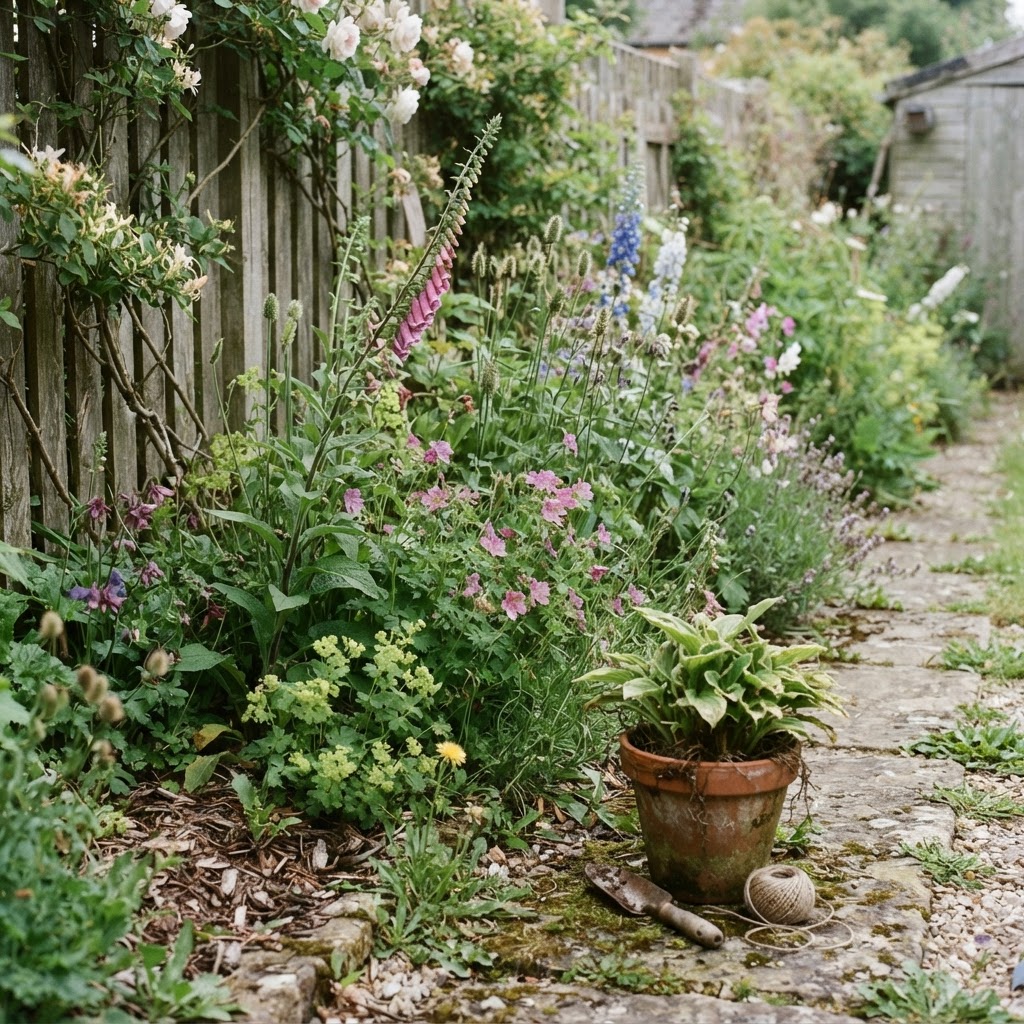
You saw it on your phone before you even got outside: a border in full, glorious flower, not a weed in sight, the kind of garden that makes you want to put your trowel down and go inside instead. Then you looked at your own patch — the bit that's gone leggy, the pot you keep meaning to repot, the corner that never quite looks like the picture in your head — and felt the familiar drop in your stomach.
Here's the thing worth saying plainly: the garden you were just comparing yourself to doesn't exist. Not in the way you think it does. It exists for about an hour, on its best day of the year, framed by someone whose entire job was to make it look that way. You've been measuring an ordinary Tuesday against a single, engineered moment — and no real garden, including the one in that photo on any other day of the year, would survive that comparison.
The garden you're comparing yourself to isn't real
Magazine spreads and the most-shared photos online are not lies exactly, but they are not the whole truth either. They're taken at the peak moment of a border's flowering, often after a professional has spent hours tidying, staking, and arranging what the camera will see. What you're looking at is a single frame pulled out of a whole year of ordinary, unglamorous growth — the same bare February stems, the same slug damage, the same gaps where something didn't come up, that every garden goes through at some point.
A real garden looks like that engineered photograph for a matter of days, if it ever does at all. The rest of the year, it looks like a garden — full and generous in some seasons, quiet and bare in others, imperfect the way anything alive is imperfect. Holding your own space to a standard that only exists for a camera flash isn't ambition. It's an argument you were never going to win, because the other side was never playing fair.
Why this standard was built to defeat you
It's worth being honest about what this comparison actually does, because it isn't neutral. A garden that's judged against an unachievable image will always fall short — and a garden that always falls short is one you eventually stop wanting to look at. That's not a coincidence. A standard designed around the single best moment of the single best garden was never going to be a fair measure for the one you actually have, tending it in whatever time and energy you actually have to give it.
This is where a lot of garden guilt quietly begins — not with the plants themselves, but with the gap between the garden in your head and the one outside your door. And once that gap opens, it has a way of feeding itself: you see the gap, you feel you've failed, the feeling makes the next visit heavier, and the garden gets avoided rather than enjoyed. If that loop sounds familiar, it's worth reading alongside why one repeated view — a kitchen window, a patio door — tends to carry the most weight of all; the mechanism is the same one at work here, just triggered by a screen instead of a sightline.
What a real-life garden actually looks like
A garden that's actually being lived in and tended is not a finished thing captured at its peak. It's always somewhere in the middle of its own story — which, properly understood, is exactly where a garden is meant to be. A bare border in February isn't a failure of gardening. It's a garden resting, the way gardens always have, long before anyone thought to photograph the process.
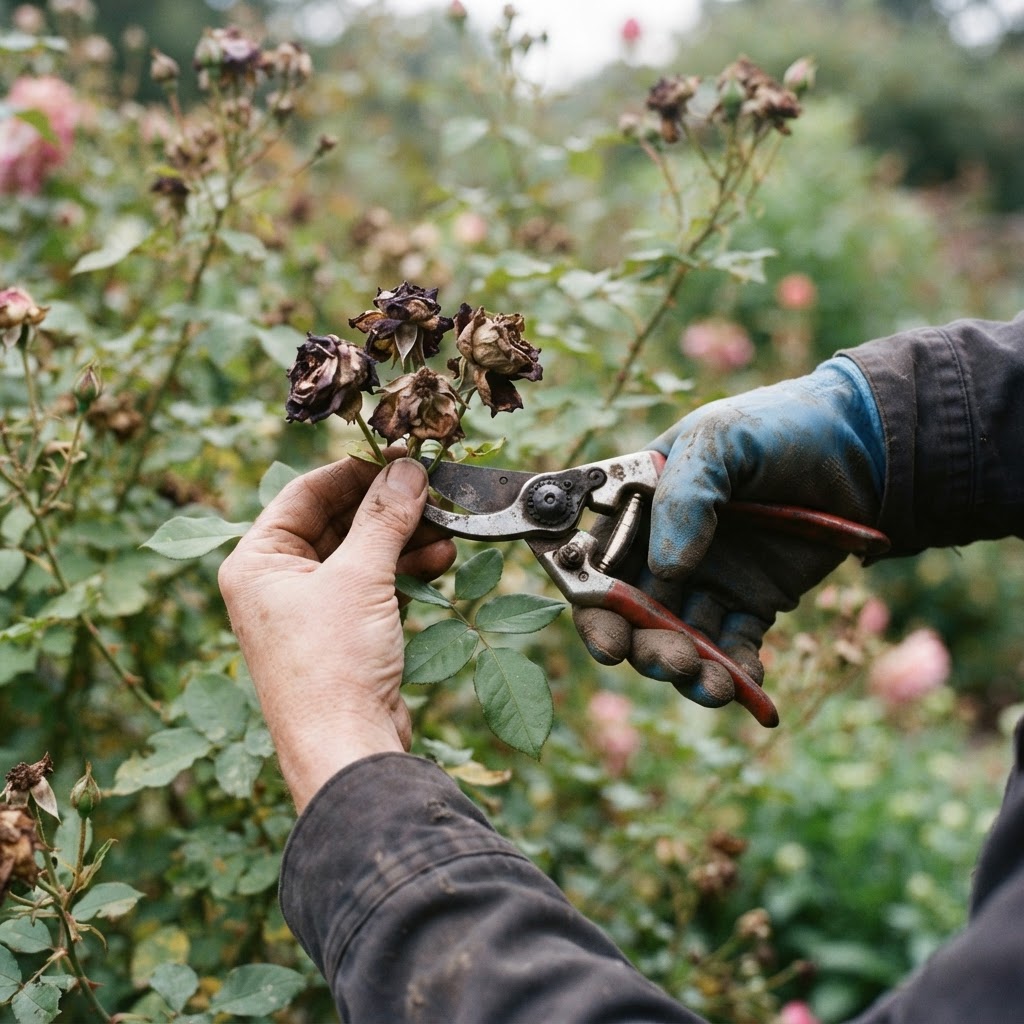
The version of success worth aiming for looks nothing like a single perfect frame. It looks like three roses deadheaded on a Tuesday morning. It looks like one weed pulled while the kettle boils, one container that's actually thriving because you've given it proper attention rather than trying to keep twenty things alive at once. Small, real, repeated acts of care count as genuine progress — not a lesser, consolation-prize version of progress, but the actual thing itself. A garden built from those small acts, over months and years, ends up more alive than any styled photograph, because it's still growing rather than frozen at its best possible angle.
The permission this actually gives you
None of this is an argument for letting things go entirely — it's an argument for measuring yourself against something real. You're allowed to have a messy season. You're allowed to let a plant die without treating it as a verdict on your ability. You're allowed to enjoy a garden that will never make it into anyone's feed, because the point of it was never to be photographed. It was to be yours, and to be somewhere you actually want to stand.
Defining your own standard
If the magazine standard has to go, it needs replacing with something more honest — and more useful. Try asking a different question than "does this look impressive?" Ask instead: does this space feel cared for? Is there evidence, however small, that someone tends it? Would I be glad to stand here with a cup of tea, whatever state it's currently in?
That's a standard a real garden can actually meet, on an ordinary Wednesday, without anyone styling it first. It shifts the measure from an image you'll never quite recreate to a feeling you can create most days, in ten minutes, with whatever the garden happens to be doing this week.
This week: retire the comparison
Next time you catch yourself measuring your garden against a photo — online, in a magazine, in a neighbour's front garden — pause and ask the smaller, fairer question instead: is there one small thing here that would make today's version of this space feel a little more cared for? Do that one thing. Let the comparison go unanswered. It was never a fair question to begin with.
If perfectionism is the pattern that keeps tripping you up, our Break the Guilt Loop worksheet is a short, honest way to name it — and start loosening its grip.