One Task Per Visit: Why Doing Less in the Garden Gets You More
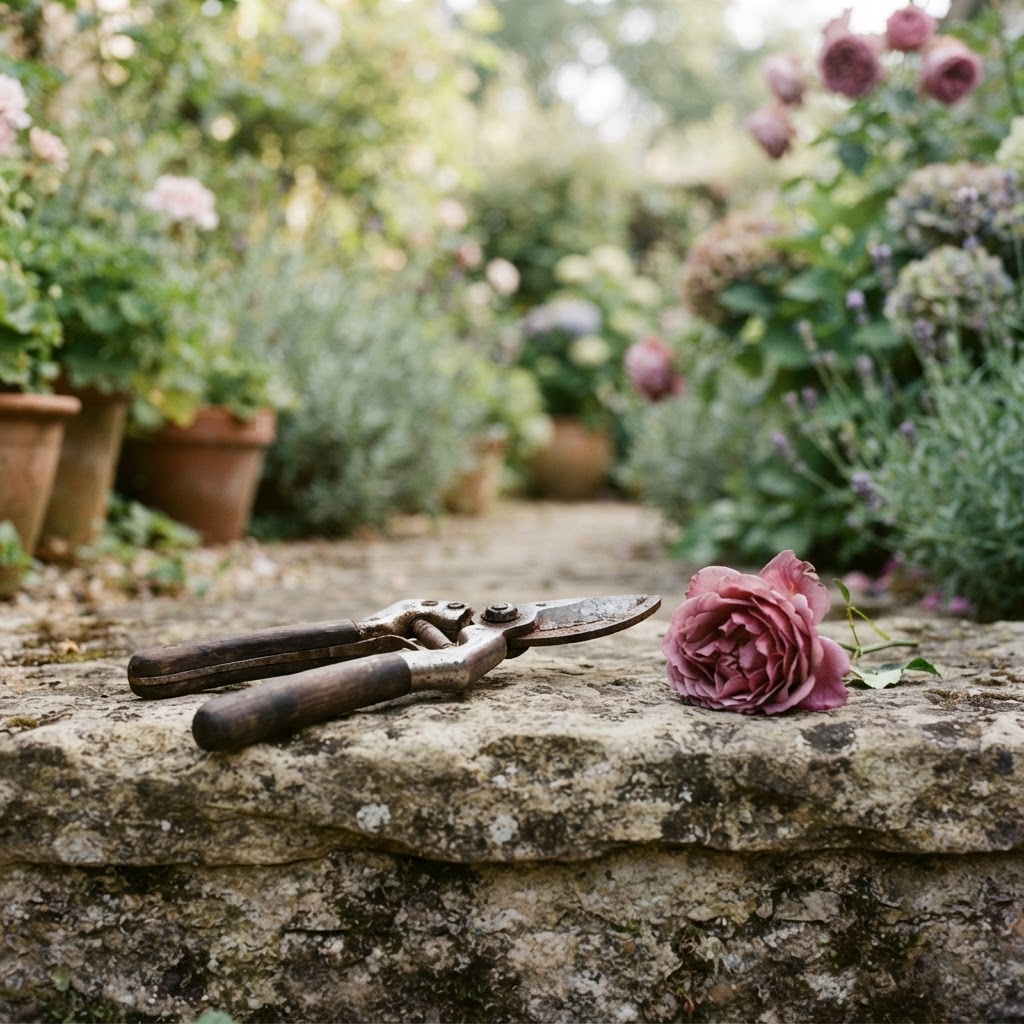
There's a particular kind of standing still that happens in a garden when you have ten minutes and far too many options. You know something needs doing. You can probably see six things that need doing, if you're honest. Should you deadhead? Weed? Water the containers? Check for pests? The sheer abundance of possibility, rather than helping, becomes its own kind of prison.
Most people assume this hesitation means they don't know enough, that a more experienced gardener would simply glide from task to task with confidence. It isn't a knowledge problem at all. It's a decision problem, and the solution turns out to be smaller and stranger than most people expect: choose one thing, and leave the rest for tomorrow.
The Prison of Too Many Options
Imagine standing in your garden, ten minutes available, knowing exactly what needs doing but somehow unable to choose where to begin. You weigh the options. You start towards the weeds, then reconsider and think about the thirsty pot by the door instead, then notice the aphids on the roses and wonder if that should take priority after all. Several minutes pass this way, spent entirely on deciding rather than doing, and the ten minutes you had are suddenly six, then four, then gone, and you've accomplished nothing at all. Worse, you feel oddly more tired than if you'd actually done something.
This is a remarkably common experience, and it has very little to do with gardening skill. It's simply what happens when a finite amount of time meets an effectively infinite list of possible tasks. The mind, faced with too many reasonable choices, often defaults to choosing none of them, or to darting between several without properly finishing any. The result is a garden that hasn't improved much and a person who feels frustrated rather than satisfied, despite having genuinely tried.
The fix isn't more willpower or more knowledge about which task matters most in some objective sense. It's a rule simple enough to apply in the moment, every time: one task per visit.
Why More Tasks Doesn't Mean a Better Session
There's a persistent, almost universal assumption that a good gardening session is measured by how much got done. More weeded, more deadheaded, more tidied, more accomplished, all in the same ten minutes if possible. It feels intuitive. It's also, according to how this practice actually works best, backwards.
A visit where you dart between six half finished jobs rarely leaves anyone feeling satisfied, however much technically got touched. A visit where you choose one task and finish it properly, giving it your full and genuine attention, tends to leave people feeling calmer and more connected to their garden, even though objectively less happened. The garden itself often benefits more too, since a task done properly, whether that's thorough deadheading or a weed pulled root and all, tends to hold longer than six tasks each done at half effort.
This is worth sitting with, because it runs against so much of the productivity thinking most of us carry into every part of our lives. More isn't automatically better. A single task, chosen deliberately and completed with real attention, earns something that six scattered tasks never quite manage: a genuine sense of having done something, rather than merely having been busy.
The Discipline That's Hardest to Learn
If there's one part of this practice that people, almost universally, find hardest to stick to, it's this one. The urge to fix everything you notice, the moment you notice it, is strong and completely understandable. You're already outside. You already have the trowel in your hand. Why not just quickly deal with that other weed while you're there?
The trouble is that "quickly deal with" rarely stays quick. One extra task becomes two, then three, and the ten minutes you'd set aside has quietly become forty, and the discipline that made the practice sustainable in the first place has slipped away without you really deciding to let it go.
Here's what tends to help: expecting, in advance, that you'll notice several other jobs on the way to the one you've chosen. This isn't a sign you chose badly, or that your garden has too many needs. It's simply what a living garden does; it always has more going on than any single ten-minute visit could address. Notice those other jobs. Let them register properly, rather than pushing them out of your mind entirely. And then leave them, deliberately, for tomorrow. This moment is for this task. The others will still be there, patiently, waiting their turn.
Three Kinds of Garden Time
It helps to understand that not every visit needs to look the same, even within the one-task rule, because garden time tends to fall into three loose categories.
There's maintenance work: the deadheading, the light weeding, the checking of containers for moisture. Unglamorous, quietly essential, and the kind of task that keeps a garden from sliding gradually backwards. Done daily rather than saved for a weekend, this sort of task takes almost no time at all, because you're catching small problems while they're still small.
There's slower work too: planting, mulching, rearranging, genuinely improving something rather than simply maintaining it. This isn't urgent, but it's deeply satisfying, and it tends to arrive naturally on the days when you have a little more time and energy, when ten minutes stretches into twenty without you quite noticing, because you're enjoying yourself rather than working through an obligation.
And then there's a third kind of garden time that involves no task at all: pure presence. Sitting with your tea while the light changes. Watching bees move through the lavender. Following a blackbird with your eyes as it works along a border, unhurried and purposeful in its own way. This isn't laziness, whatever an old, exacting inner voice might suggest. It's simply a different, equally valid way of spending your ten minutes.
The most restorative visits, over time, tend to include a little of all three: a small task done properly, occasionally a bit of slower improvement, and always some genuine noticing before you head back inside. But on any given day, one is entirely enough.
Prevention Over Recovery: Why Small and Often Beats Catching Up
One task a day sounds, on paper, like it could never keep pace with a garden's actual needs. In practice, it does something cleverer than simply keeping pace: it prevents most problems from growing large enough to need a big response in the first place.
Catching a pest problem when there are a dozen aphids on a rose, rather than hundreds, takes moments. Pulling a weed the day it appears, before it's had the chance to flower and set seed, takes seconds rather than an afternoon's project. Watering a container the morning it first looks dry, rather than three days later when it's visibly wilting, saves the plant and saves you a much bigger job of nursing it back. This is the quiet logic underneath the whole one-task approach: small, regular attention catches things while they're still small, which is precisely what makes the small, regular approach sustainable in the first place.
A weekend spent trying to tackle everything at once, by contrast, is very often spent undoing problems that had two full weeks to establish themselves. That's not a more thorough approach. It's simply a more exhausting way of dealing with the same amount of underlying work, arriving too late to catch things at their easiest, cheapest point.
How to Choose Your One Task
If narrowing everything down to a single task still feels difficult in the moment, a few simple approaches tend to help.
Let the Garden Tell You
Rather than deciding in the abstract what "should" be done, look first. What's actually changed since yesterday? What's the most obviously pressing thing in front of you right now, today? The garden itself is usually a better guide to what matters most in this particular ten minutes than any general mental checklist.
When in Doubt, Choose the Essential Task
If nothing obviously calls out for attention, it can help to have a small, trusted shortlist of tasks that reliably create the most visible improvement for the least time and effort. Having a few of these in mind in advance, rather than trying to weigh every possible option fresh each morning, removes a great deal of the in-the-moment decision fatigue that leads to standing paralysed in the first place.
Fewer Tools, Fewer Decisions
It's worth mentioning that the same principle that governs tasks applies rather well to tools too. Working with a small, well chosen set of tools, kept close at hand and properly maintained, removes another layer of decision making before you've even started. Fewer, better tools tend to mean less time spent deciding and more time spent actually tending.
What Happens to the Jobs You Leave Behind
It's natural to wonder, especially early on, what happens to all the tasks you notice but don't do. Do they pile up? Does leaving them create a backlog you'll eventually have to face all at once?
In practice, no, not if the daily visits continue. Because you're returning tomorrow, and the day after, each of those noticed-but-not-done tasks simply becomes tomorrow's candidate for the one task you choose. Nothing is genuinely lost by waiting a day. A weed noticed today and pulled tomorrow is barely different from a weed pulled today. A border that could use tidying, tidied slightly later than you first spotted it, still gets tidied, in its own time, without anyone needing to remember it as an outstanding obligation weighing on them in between.
The jobs you leave behind aren't a debt accumulating against you. They're simply next week's ten minutes, arriving in their own good time.
Practising the One-Task Rule This Week
If you'd like to build this discipline properly, here's a simple way to begin.
For the next week, before you step outside each day, decide in advance that you'll choose only one task, however many others present themselves once you're actually out there. If it helps, say the choice out loud to yourself once you've made it: "today, I'm going to deadhead the roses," or "today, I'm watering the containers." Having named the task before you begin makes it much easier to notice, and gently set aside, the other jobs that will inevitably tempt you along the way.
When you spot something else that needs doing, and you will, try simply saying to yourself, "that's for another day," rather than either ignoring it entirely or giving in and doing it anyway. Notice how that feels, both in the moment and by the time you step back inside. Most people find, after a week or two of genuinely practising this, that the relief of finishing something completely, rather than half finishing several things, becomes its own quiet reward.
Frequently Asked Questions
What if my one task takes less than ten minutes to finish?
Then you've finished early, and that's perfectly fine. You can choose to sit quietly and appreciate the garden for the remaining time, or simply go back inside a little earlier than planned. There's no requirement to fill every remaining second with additional tasks.
What if my one task genuinely takes longer than ten minutes?
Some tasks are naturally bigger than a single ten-minute visit can complete, and that's fine too. Larger jobs, like planting a new border, simply become several ten-minute sessions spread across a number of days, rather than one long uninterrupted effort. Do what you comfortably can in the time, then pick it up again tomorrow.
Isn't choosing only one task a bit inefficient if I'm already outside anyway?
It can feel that way at first, but the efficiency this practice is aiming for isn't about squeezing the maximum output from every single visit. It's about sustainability over the long run. A garden tended through many focused, finished visits tends to fare better over a year than one tended through occasional, scattered, half finished sessions, even if any single visit looks less impressive on its own.
How do I decide which task matters most when several seem urgent?
Trust your first, honest reaction more than you might expect. Whatever caught your eye first, or felt most pressing the moment you looked, is very often the right choice. If you're still unsure, a task that prevents a small problem from becoming a bigger one, like catching an early pest issue or watering a wilting container, is usually a safe default.
Will leaving tasks for tomorrow mean my garden gets gradually worse over time?
Generally, no, provided you're returning consistently. A garden tended with regular, one-task visits tends to stay ahead of most problems, because small issues are caught and dealt with quickly, simply spread across more days rather than crammed into fewer, longer sessions.
Does the one-task rule apply to every single visit, even on days when I have more time?
The rule is really there to protect the days when your time and energy are limited, which is most days for most people. On a day when you genuinely have more time and are enjoying yourself, letting a task naturally extend into something slower and more involved is entirely welcome. The rule exists to stop obligation from creeping in, not to limit genuine enjoyment.
One task, chosen deliberately and finished properly, is worth more than a dozen begun in a hurry. The rest of the garden isn't going anywhere. It will be there tomorrow, exactly as patient as it was today, waiting for its own turn.
Your Garden Friend