Find Your Zone 1: The 20% of Your Garden That Actually Matters Each Day
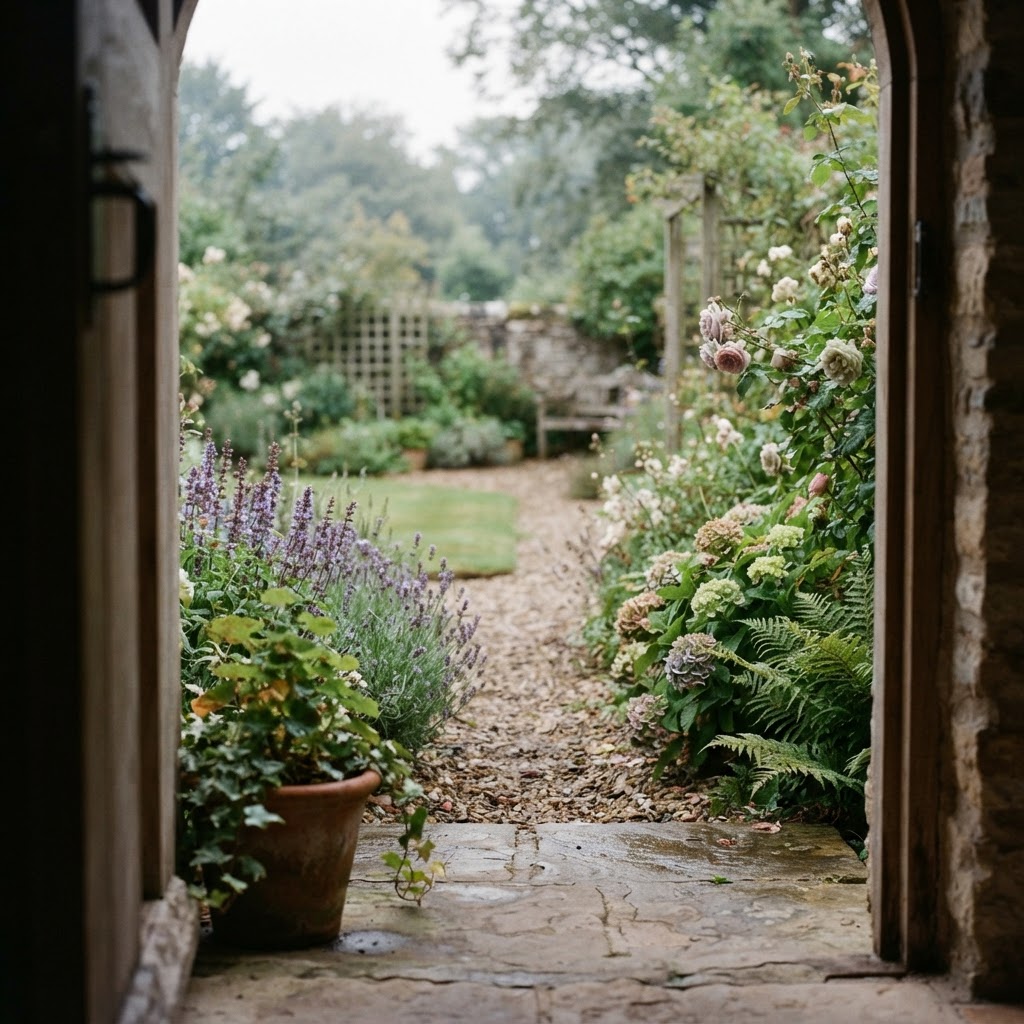
Stand at your back door for a moment and look out. Some parts of what you're seeing probably matter to you enormously. A border you glance at every time you fill the kettle. A pot by the door that you'd notice instantly if it wilted. Other parts, if you're honest, could look completely different tomorrow and you might not register the change for a fortnight.
This isn't a failing on your part. It's simply how attention works, and once you stop fighting it and start working with it, gardening gets a great deal easier. This is the idea behind zone based thinking: not every part of your garden deserves the same level of care, and giving up on the idea that it should is one of the kindest things you can do for yourself.
Why Treating Every Part of the Garden Equally Backfires
Most of us start out, without ever quite deciding to, treating our whole garden as one flat obligation. Every border, every corner, every patch of lawn is, in theory, meant to be kept to the same standard. It sounds fair minded. In practice, it's a recipe for guilt.
Here's why. A garden of any real size has far more surface area than any one person, working ten minutes a day, could possibly maintain evenly. If every square foot is an equal obligation, then most of your garden is quietly failing that obligation at any given moment, simply because you can't be everywhere at once. That's not a reflection of your effort. It's basic arithmetic. And yet the feeling that follows is rarely "this is mathematically inevitable." It's "I'm not keeping on top of things," which is a much heavier thing to carry.
Not every square foot of your garden needs maintaining to the same standard, any more than every task on your desk deserves equal urgency, or every room in your house needs the same weekly attention. Some things matter enormously and deserve consistent, devoted care. Some things need only occasional attention. And some things are genuinely better left to find their own way. Learning to tell these apart, and giving yourself permission to act on what you already know, is what zone based thinking actually offers.
The Three Zones, Explained
The garden divides naturally into three zones, not by size or by type of planting, but by how much each area shapes your daily experience of the space.
Zone 1: The Daily Ritual Space
Zone 1 is the part of your garden that's visible from the window you look through most often, the space you pass on the way to the bins, the pot by the front door that greets you and everyone else who visits. It's typically around a fifth of your total garden, though that proportion flexes depending on the shape and size of the plot.
Zone 1 is where the immediate rewards of consistent attention are most visible, and where those rewards lift the feeling of the whole garden. This is where your daily ten minutes will most often begin: a quick visual check of what needs doing, deadheading and tidying, a watering check for containers and key plants, a brief scan for anything unusual. In summer this might mean much the same small tasks every morning. In winter it might simply mean five minutes of observation and a check that nothing has been damaged by frost. The season shapes what you do there. The daily presence is what stays constant.
Zone 2: The Supporting Cast
Zone 2 is the area that frames and supports Zone 1, typically around 30 percent of your space. Think of the structural shrubs that hold their shape through the year, the perennial borders that shift through the seasons, the trees that give the garden scale and shade. Zone 2 gives a garden its depth and its sense that there's more to discover than what's immediately visible. It makes Zone 1 look better simply by being a good backdrop to it.
This area asks for regular attention, but not daily attention. A couple of focused visits a week, seven to ten minutes each, tends to be enough: seasonal maintenance, a little pruning or staking, catching small problems before they travel towards Zone 1. Visits here often have a different quality to Zone 1 visits, a bit slower, a bit more exploratory, following what the plants actually need rather than how the space looks from the window. A good deal of genuine gardening pleasure lives in this zone.
Zone 3: The Natural Foundation
Zone 3 is the background of the garden, often around half of the total space, and it's the area that provides ecological value, seasonal atmosphere, and the peaceful sense that your garden has edges it hasn't bothered to police. The wilder margins. The spot where things self seed. The corner behind the shed that nobody's got round to tidying, and perhaps never needs to.
This is usually the hardest zone to embrace, especially for anyone with perfectionist instincts, because letting go here can feel uncomfortably close to giving up. It isn't. Zone 3 is a conscious choice to let part of your garden be what it wants to be, and that distinction matters, both to the garden and to how you feel walking through it. A single gentle visit a week, five to ten minutes, is usually plenty: noticing wildlife activity, appreciating whatever the season's brought, stepping in only when something genuinely needs it.
Many gardeners find that some of their garden's greatest gifts come from the areas they eventually learn to leave alone. A neglected corner left to naturalise often ends up drawing more birds, more butterflies, more of the quiet activity that makes a garden feel alive, all while asking for dramatically less from you.
How to Find Your Own Zones
Zones aren't something you impose on a garden from a book. They already exist in every garden, whether or not anyone's named them. Finding yours is mostly a matter of noticing what's already true.
Notice Where Your Attention Already Goes
Spend a few days simply paying attention to which parts of the garden naturally come into your awareness, and which don't. Where do you look when you glance out of the kitchen window while the kettle boils? Where do you sit, without really deciding to, when you want a few minutes outside? Which paths do you walk most often without thinking about it? These spaces are almost always Zone 1, and most people find, once they start paying attention, that the answer was obvious all along. They simply hadn't been given permission to act on it.
Think About First Impressions
Imagine arriving at your own front door as a visitor would, seeing it for the first time. What do you notice? What shapes that first impression? These spaces, the ones that colour how someone feels on arrival, are almost always Zone 1 too, even if they're not where you personally spend the most time.
Let the Seasons Reveal Priorities
Different times of year reveal different priorities. Notice which areas pull your attention first when spring arrives, and which fade into the background as autumn and winter set in. A space you barely register when the leaves are off is very likely Zone 3. A space you miss the moment it stops looking its best, in any season, is almost certainly Zone 1.
You don't need to map the whole garden on day one. Just begin noticing, and the hierarchy tends to reveal itself fairly quickly, because it was already there.
What This Looks Like in Real Gardens
Zone thinking applies whatever size garden you're working with. What changes is the proportion, not the principle.
In a small urban garden, Zone 1 might genuinely be 40 percent of the whole space, simply because everything is visible at once from a small patio. It might be a handful of containers, a climber on a trellis, a herb trough by the back door, all tended daily in eight focused minutes. A wildlife corner tucked into the far angle, perhaps a bird bath and a patch of wildflowers, gets a weekly check and very little else. Nobody misses the weekend weeding sessions that never happen.
In a larger family garden, Zone 1 might be closer to 15 percent: the front entrance, the patio containers, the border visible from the sitting room window. The lawn edges, the back boundaries, the wild patch the children have quietly claimed as their own, all settle back without anyone particularly noticing the shift. Wildlife activity tends to increase when Zone 3 is left more alone. So, usually, does everyone's enjoyment of the garden as a whole.
In a large, established garden, particularly where energy or mobility is more limited, zone thinking can be the difference between a garden that feels manageable and one that feels like a losing battle. Zone 1 might shrink to a small number of raised beds close to the house, planted with reliable perennials and seasonal containers. The mature trees and shrubs that largely look after themselves settle into Zone 3 with a weekly glance. The garden keeps its character. The gardener keeps their energy for the parts that matter most to them.
Zone based thinking doesn't diminish a garden. It clarifies it.
When Zone Thinking Needs Adapting
Zone based thinking works for most gardens most of the time, but a few situations come up often enough to be worth naming directly.
If your Zone 1 feels too large to manage in ten minutes, it's worth dividing it honestly into a daily attention area and an every other day area, and asking whether some of what you've assigned to Zone 1 is really Zone 2 wearing a Zone 1 label. Redesigning sight lines, moving a container out of direct view from the kitchen window, for instance, can help too.
If your whole garden feels equally important and you're struggling to separate the zones at all, try focusing on how you actually use the space rather than its visual boundaries. Where do you genuinely spend time? Start with just two categories, higher attention and lower attention, and refine from there once the broad shape feels right. Containers are a useful tool here, since they naturally create a clearly defined Zone 1 wherever they're placed.
If your Zone 3 looks simply messy rather than intentionally wild, a little structure goes a long way. Adding a few structural evergreens gives year round framework and signals that the wildness is a choice. A clear edge between Zone 2 and Zone 3, a mown strip or a defined border, does a similar job, telling the eye that this untidiness was decided rather than neglected.
If the seasons keep shifting your zones underneath you, that's not a problem to solve so much as something to allow for. Some areas naturally move between Zone 2 and Zone 3 across the year. Keeping a few year round Zone 1 elements, evergreens, containers, something reliably present, gives the garden an anchor through those shifts.
If others in the household expect equal attention everywhere, it often helps to involve them in identifying zones rather than deciding alone. Let them claim an area as theirs. Framing the conversation around more time to actually enjoy the garden, rather than less work maintaining it, tends to land better than any argument about fairness.
Your First Three Weeks with Zones
If you'd like to try this properly, here's a simple way to ease into it.
In your first week, simply notice. Walk through your garden without any pressure or plan, and observe which areas you naturally look at most during your ordinary routine. Which spaces make you feel something when they're looking good? Which do you barely register even when they're thriving? Make a mental note. Zone 1 is already revealing itself to you.
In your second week, sketch and feel your way towards a rough shape. Draw a loose sketch of your garden with tentative zone boundaries. It doesn't need to be accurate; it's a thinking tool, not a plan set in stone. Spend a few days directing a little more attention towards what you've marked as Zone 1, and notice how the garden starts to feel as a result. Adjust the boundaries based on what feels honest rather than what seems logical on paper.
By the third or fourth week, begin directing the majority of your daily ten minute visits towards Zone 1, and let Zone 3 start relaxing towards its own character. Notice what changes, both in the garden itself and in how you feel looking out of the window each morning.
The Deeper Gift of Zone Thinking
There's something underneath all of this that goes beyond gardening. Once you accept that different parts of your garden deserve different levels of attention, it becomes a little easier to accept the same thing elsewhere in your life. Not every task deserves equal energy. Not every problem deserves equal focus. Some things matter enormously and deserve your consistent care. Some things need only occasional attention. And some things are genuinely, legitimately best left alone.
That's not a lesser way of living, or a lesser way of gardening. It tends, in practice, to create more beauty and more ease than endless effort ever managed. Some of your garden's greatest gifts, in fact, will likely come from the very areas you eventually learn to leave alone.
Frequently Asked Questions
How do I know if something is Zone 1 or Zone 2?
A useful test is to ask whether you'd notice within a day or two if it started looking untidy. If yes, it's very likely Zone 1. If it would take a week or more before you registered a change, it's probably Zone 2. Trust your own honest reaction over any strict rule about size or plant type.
What if my garden is very small and I can't really divide it into three zones?
Small gardens often work perfectly well with just two zones, a higher attention area and a lower attention one, rather than forcing a three way split that doesn't suit the space. The principle matters more than the exact number of categories.
Will my neighbours think Zone 3 looks neglected?
It's a fair worry, and a little structure usually solves it. A defined edge, a mown strip, or a few evergreen shapes at the boundary tells the eye that the wildness beyond is a choice rather than an oversight. Most people can sense the difference between an intentionally wild corner and a genuinely abandoned one.
Can my zones change over time?
Yes, and they usually do. As your life changes, as children grow, as mobility or energy shifts, or simply as you get to know your garden better, your zones are likely to shift with you. Revisit them every so often rather than treating your first sketch as permanent.
Do I need to tell anyone else in my household about my zone system for it to work?
It helps, especially if others use the garden too, but it isn't essential. Even a private, unspoken sense of where your attention belongs will change how sustainable your gardening feels. That said, involving family members in claiming their own areas often smooths over any friction about who's doing what.
Isn't it a bit unfair to some parts of the garden to just leave them alone?
A garden doesn't experience fairness the way people do. Many plants and wild spaces genuinely thrive with less interference, not more. What looks like neglect from a tidiness standpoint is often exactly the right amount of attention from an ecological one.
Your garden already knows its own zones. It's been showing you, quietly, every time you glance out of the window or choose where to sit with your tea. All that's left is to notice, and to give yourself permission to act on what you find.
Your Garden Friend