Anxious, Flat, or Wired: Matching Your Ten Minutes to How You Actually Feel Today
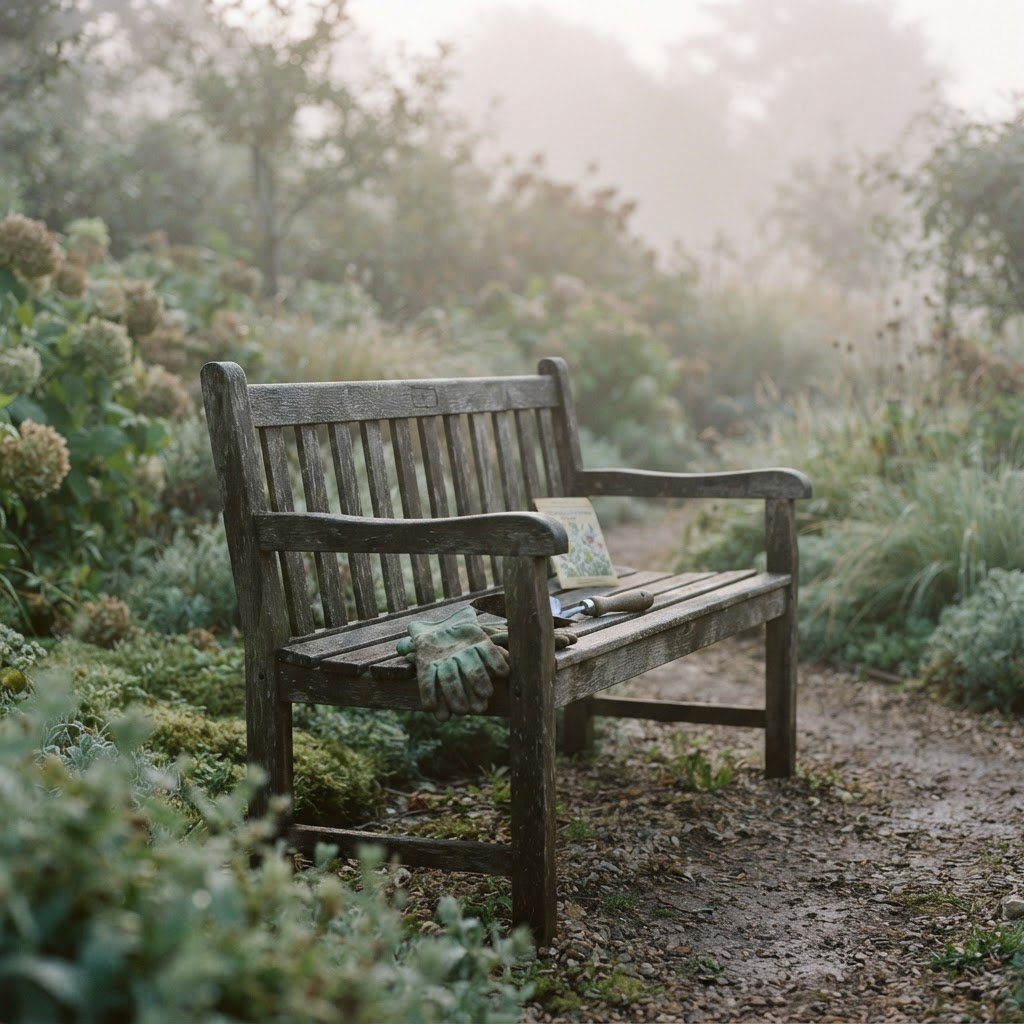
Most gardening advice assumes you arrive at the garden with a plan. A task to complete. A season to respond to. A bed that needs weeding or a hedge that needs trimming. The whole premise is that you know what the garden needs, and that you have the energy and inclination to provide it.
That isn't how it usually works, though, is it? Most days, you arrive at the garden carrying a feeling rather than a plan. Anxious and unable to settle. Flat in that particular grey way that isn't quite sadness but isn't fine either. Wired and exhausted at the same time, that oddly modern combination of too much stimulation and not nearly enough rest. Guilty about the garden itself. Or simply depleted, with nothing much left to give, wanting something but not entirely sure what.
Conventional gardening advice tends to fail in exactly these moments, because it speaks to the garden's needs rather than yours. It tells you what the plants require, what the season demands, what a task list says should happen this week. It rarely asks how you actually are. This article does things differently.
Why Task-Based Gardening Advice Fails on Hard Days
Task-based advice works reasonably well when you have energy and a clear head. On those days, a list of jobs is genuinely useful. The trouble is that a fair number of days aren't like that, and on those days, a list of jobs becomes just one more thing you're failing to get through, another source of quiet pressure layered on top of whatever you were already carrying.
This is where hard days quietly turn into missed days, and missed days start to reopen the very guilt loop this whole practice exists to dismantle. What's needed on those days isn't a smaller task list. It's a completely different starting point.
A Different Starting Question: How Do You Feel Right Now?
Rather than organising garden rituals by plant, season, or task, it helps to organise them by emotional state instead. The question changes from "what does the garden need today" to something more honest: given how I feel right now, what is the smallest useful thing I can do outside?
This isn't therapy, and the garden isn't a treatment room. But it is a space with a genuine, modest capacity to meet you where you are, provided you know which small ritual to reach for. Five emotional states, five rituals, each with a sensory anchor to return to if your mind starts to drift. You don't need to remember all five. You only need to find the one that matches today.
The Five Rituals for Five Feelings
Each of these rituals takes somewhere between five and ten minutes. None of them requires equipment you don't already have. None of them asks you to be anywhere other than where you actually are, feeling anything other than what you actually feel.
When You Feel Anxious or Overwhelmed: The Slow Watering
Anxiety is a future-tense feeling. It lives in what hasn't happened yet, in the list of things that might go wrong, in the gap between where you are and where you feel you're supposed to be. The mind races ahead and the body follows, shoulders tight, breath shallow, already braced for something that hasn't arrived.
The garden, by contrast, is stubbornly present tense. It is this soil, this pot, this particular moment of water meeting compost and the smell that rises from it, cool and dark and immediate, entirely indifferent to your list.
Fill a watering can and take it outside. Pour slowly. Notice the sound of the water changing as the pot fills. The cool metal handle in your hand. The smell lifting from the compost as moisture reaches it. The weight of the can gradually becoming lighter, your arm dropping with it. If your pots don't need watering, run your fingers slowly through a lavender, rosemary, or thyme plant instead, and breathe in whatever releases onto your hands.
When You Feel Flat or Empty: The One Beautiful Thing
Flatness has a different texture from anxiety. It's the grey feeling, a low-level absence of colour or motivation, not quite sadness but not quite fine either. In this state, a task list feels like an extra weight, and effort feels genuinely unavailable.
What tends to help, quietly and reliably, is something much simpler: proximity to beauty. Not grand beauty. Small beauty, the kind that doesn't ask you to respond to it, that simply exists and can be noticed.
Go outside with no agenda except to find one beautiful thing. Don't tidy. Don't weed. Don't start anything at all. Walk slowly, even if that's only a few steps from the door, and look until something catches your eye. It might be a flower you hadn't noticed opening, or the particular way late light is falling across a pot at this hour. When you find it, stop, and stay with it for a moment. That's the whole ritual. Nothing further is required.
When You Feel Wired and Can't Switch Off: The Repetitive Task
This state is its own particular exhaustion. You're not tired in the way sleep would fix. You're overstimulated, full of caffeine and decisions and information and the residue of too many hours spent reacting to things. You want to stop, but you don't quite know how. Sitting still somehow feels worse. But more effort feels impossible too.
The answer isn't rest in the passive sense. It's gentle, physical repetition. When the mind is running fast, something rhythmic that gives the hands a clear task, without requiring much from the mind, tends to help. Deadheading is the most reliable choice. Take your secateurs, or just your fingers, and remove the spent blooms from one plant. Snip. Step back slightly. Snip. The rhythm settles in almost immediately, and your hands having something clear to do frees the rest of you to begin, very gradually, slowing down. When your mind starts composing emails or solving tomorrow's problems, and it will, gently bring your attention back to the task. Back to the snip. Back to this plant, now.
When You Feel Guilty About the Garden: The No-Judgement Walk
This one is specific to a feeling this whole practice exists to address: the particular weight of looking at your garden and feeling you've let it down. The weeds you've meant to pull for three weeks. The pots that went dry last month. The corner you keep walking past without looking at properly.
When guilt is the primary feeling, being told what to do tends to make things worse, adding another task to the pile of things you're already failing at. This ritual asks nothing of you. No task, no improvement, no fixing.
Walk slowly through your garden, even if that's only three steps from the back door to the nearest pot. Look at what's actually there, without the running commentary of the critical inner voice. That voice will show up anyway, it usually does, but see if you can look past it, or at least alongside it, towards what's genuinely in front of you. Notice three things that are growing, flowering, or simply alive, entirely without help from you. Life has been happening in your garden this whole time. It hasn't been waiting for you to get it together. You haven't failed the garden. You've simply been busy. Those are not the same thing.
When You Have No Energy But Need Beauty: The Doorstep Sit
Sometimes ten minutes feels like too much. Sometimes even the idea of "going outside" feels like a commitment your body isn't willing to make. The tiredness runs deep, or the day has left you feeling not so much depleted as hollow.
This ritual asks almost nothing. Sit at your back door, or your front step, whichever is easier to reach. You don't need to go into the garden itself. You don't need to put on shoes. Stay in the doorway, half in and half out, with something warm to hold, and simply look at whatever is in front of you for ten minutes. The light will be doing something, it always is, even on a grey day. The air will be a different temperature from the air indoors, and you'll feel it on your face before you've consciously decided to notice. You don't have to interact with the garden at all. The being-near is the whole ritual. This counts. This is enough.
This Is Not Therapy, and That's the Point
It's worth being honest about what these five rituals are, and just as importantly, what they aren't. They are not a comprehensive system, and they will not resolve the underlying sources of anxiety, flatness, or exhaustion in your life. They were never intended to.
What they can do, reliably, is offer a small, genuine interruption to whatever state you're currently in. A few minutes of something sensory, real, and unhurried. Some days that interruption will feel significant. On other days, you'll come back inside feeling more or less the same as when you went out, only with slightly damp hands and the smell of rosemary lingering on your fingers. Both outcomes are entirely fine. You showed up. You stepped outside. That is the practice, whatever the immediate result feels like.
If what you're carrying feels heavier or more persistent than a single difficult day, this practice is a complementary one, never a replacement for proper support. It's worth speaking with a doctor or a qualified professional about what you're experiencing, and this small garden ritual can sit alongside that conversation, not instead of it.
How to Choose the Right Ritual in the Moment
You don't need to read through all five options every time. Instead, pause for a moment before you step outside and ask yourself, honestly, which of these states feels closest to where you are right now. Trust your first answer rather than overthinking it. If two feel equally true, either ritual will serve you well; there's no wrong choice here, only a smallest useful next step.
It can help to keep a simple written version of the five states and their rituals somewhere visible, a note on the fridge, a card by the back door, so that on a genuinely low day you don't have to rely on memory to find your way to the right one.
Why the Small Interruption Is Enough
There's a temptation, especially for anyone used to measuring progress by results, to want these rituals to do more: to properly fix the anxiety, lift the flatness for good, or resolve whatever's making a day feel wired and unmanageable. That's simply not what a ten-minute garden ritual is built to do, and expecting it to do so sets up a new, quieter version of the very disappointment this practice exists to relieve.
What the ritual can reliably offer is smaller and, in its own way, more dependable: a genuine pause, a moment of sensory contact with something real and unhurried, and the simple fact of having shown up for yourself in a small way on a day when a large way wasn't available. That's not a consolation prize. On the right day, it's exactly enough.
Building Your Own Mood-to-Ritual Habit
If this idea is new to you, it's worth practising deliberately for a couple of weeks before expecting it to feel automatic. The next time you notice a strong feeling before heading outside, whatever it is, pause and name it honestly to yourself. Then choose the matching ritual, even if a different task was originally on your mind for the day.
Over time, this pairing tends to become instinctive, the way reaching for a jumper on a cold morning becomes instinctive without much conscious thought. You'll simply start to know, almost before you've fully named the feeling, which small ritual today is asking for.
Frequently Asked Questions
Are these rituals a substitute for therapy or professional mental health support?
No, and they were never intended to be. They offer a small, reliable interruption to a difficult state, not a resolution to whatever's causing it. If you're struggling more persistently, it's worth speaking with a doctor or qualified professional, and using these rituals alongside that support rather than instead of it.
What if I don't have a garden, only a balcony or a few pots?
Every one of these rituals works at any scale. The slow watering needs only a single pot. The one beautiful thing can be found in a single flower or a patch of light on a windowsill. The doorstep sit needs nothing more than a threshold and a few minutes to sit in it.
What if I try a ritual and don't feel any different afterwards?
That's a completely normal outcome, and it doesn't mean the ritual failed. Some days the shift is noticeable. Other days you'll feel much the same, and that's fine too. The value lies in having shown up for those few minutes, not in guaranteeing a particular emotional result.
Can I use these rituals even on a good day, or are they only for difficult ones?
They work well on any day. Many people find the repetitive task ritual genuinely enjoyable even when they're not particularly wired, or use the one beautiful thing ritual simply as a nice way to start a morning. There's no rule limiting them to hard days only.
How do I know which ritual to choose if I'm feeling several things at once?
Trust whichever feeling seems loudest or most immediate right now, rather than trying to address everything at once. You can always try a different ritual tomorrow if today's choice doesn't feel quite right. There's no wrong answer here.
Is it normal to feel guilty about needing a ritual just to feel able to garden at all?
It's an understandable reaction, but it's worth setting down gently. Needing a smaller entry point on a hard day isn't a sign of weakness or failure. It's simply an honest response to how you're feeling, and honesty is exactly what this whole practice is built to reward.
You don't need energy to begin. You only need to arrive, however you're feeling, and let the garden meet you exactly there.
Your Garden Friend